

Quote to Cash Automation Platform for CRM, CPQ, ERP and Billing
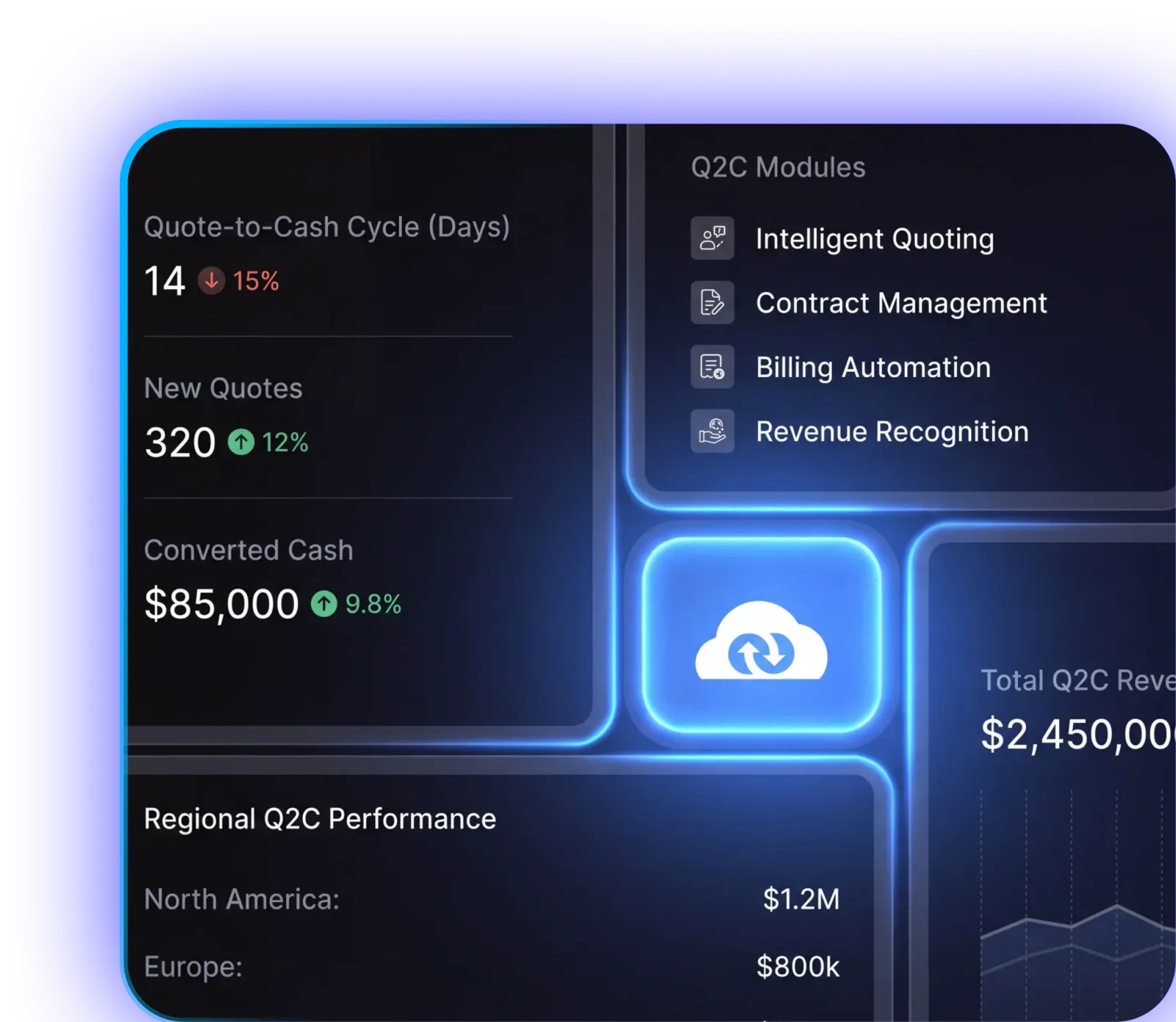
Quote to cash automation connects every step from a sales quote to collected and recognized revenue (configure, price, quote, contract, order, fulfillment, invoice, payment and revenue recognition) so data moves between CRM, CPQ, ERP and billing without re-entry. APPSeCONNECT runs those handoffs as monitored ProcessFlows, so deals turn into cash faster with fewer billing errors.
















Why APPSeCONNECT
One Platform to Automate Every Step From Quote Approval to Revenue Recognition
Quote-to-cash gets harder when sales, operations, and finance all work in separate systems. APPSeCONNECT brings those systems together, so the process can move forward with fewer stops, rechecks, and manual follow-up.

Unified Data Across CRM, ERP, And Billing
Customer details, pricing, and invoice records stay consistent across every connected tool so teams always work from one accurate source. That alone removes most of the back-and-forth that slows deals down.

No Manual Handoffs Between Quote, Order, and Invoice
Once a quote is approved, the right data moves to the next stage on its own without re-entry or follow-up. Orders get created faster and invoices go out sooner with far fewer errors.

Live Sync Across Every Connected System
When changes flow in real time across CRM, ERP, and billing, every team stays on the same page. No more working from outdated numbers or chasing status updates across tools.

A Shorter, Faster Cash Cycle
Removing small friction points across the process adds up quickly. Quotes move faster, invoices go out cleaner and the gap between a signed deal and collected cash gets noticeably shorter.
From Signed Deal to Collected Cash - Close The Gap With QTC Automation

Proven Expertise Across the Entire QTC Lifecycle

Accelerate Deal-to-Cash Velocity
Billing Accuracy at Every Stage

Flexible Enough to Match Your Unique QTC Process
Fewer Handover Gaps
What Is Quote to Cash Automation?
Quote to cash (QTC or Q2C) is the end-to-end process that turns a buyer's interest into money in the bank. It starts when a sales rep configures and prices a quote and ends when finance has collected the payment and recognized the revenue. Quote to cash automation means the records created at each step move to the next system on their own, with approvals, validations and error handling built in. QTC is wider than order to cash: order to cash starts at the order, while quote to cash adds the front end of the deal (configuration, pricing, quoting, approvals and contracts), which is where most pricing and discount errors begin.
| Stage | What happens | Typical system | Record handed on | Common failure without automation |
|---|---|---|---|---|
| 1. Configure | Rep selects products, options and bundles | CPQ or CRM | Product configuration | Invalid product combinations |
| 2. Price | List price, discounts and customer-specific pricing applied | CPQ, ERP price lists | Price lines | Prices out of date with the ERP |
| 3. Quote and approve | Quote document created; discount approvals routed | CPQ or CRM | Approved quote | Approvals by email, no audit trail |
| 4. Contract | Terms agreed and signed | CLM or e-signature | Signed contract | Signed terms never reach billing |
| 5. Order | Sales order created from the accepted quote | ERP | Sales order | Order re-keyed by hand |
| 6. Fulfill or provision | Goods shipped or service activated | ERP, WMS, subscription system | Fulfillment or activation | Billing starts before or long after delivery |
| 7. Invoice | Invoice issued, including e-invoices where required | ERP or billing | Invoice | Wrong amounts, missing tax data |
| 8. Collect | Payment received, matched and posted | Payment gateway, ERP | Payment and receipt | Unmatched payments, late reminders |
| 9. Recognize revenue | Revenue booked under ASC 606 or IFRS 15 | ERP or revenue system | Journal entries | Manual spreadsheets at month end |
| 10. Renew or amend | Upsell, renewal or change order | CRM, CPQ | New quote | Renewal dates missed |
Which systems a QTC integration connects
- CRM: accounts, contacts, opportunities and the quote itself.
- CPQ: product rules, price books and approvals, either a standalone tool or the CPQ inside your CRM.
- ERP: items, price lists, credit limits, sales orders, invoices and the general ledger.
- Billing and payments: subscriptions, usage, card or bank payments and collections.
- E-commerce and portals: self-service orders that skip the sales quote but still need the same pricing and tax rules.
Quote to cash KPIs to track
| KPI | What it measures | Why automation moves it |
|---|---|---|
| Quote cycle time | Days from opportunity to sent quote | Prices and approvals are no longer manual |
| Quote-to-order conversion | Share of quotes that become orders | Faster, cleaner quotes close more often |
| Order entry time | Time from accepted quote to ERP order | No re-keying |
| Invoice accuracy | Invoices issued without credit notes or disputes | Prices and terms come from one record |
| Days sales outstanding (DSO) | Average days to collect | Invoices go out on time and payments are matched |
| Revenue leakage | Discounts, unbilled items and missed renewals | Every contract line reaches billing |
For the order-onward half, see order to cash automation. For the billing step, see invoice processing automation, and AP and AR automation for receivables.
What Changes for Quote to Cash in 2026 and 2027
Several dated changes affect QTC systems over the next two years. Check each one against your process.
| Date | Change | Source | What it means for QTC |
|---|---|---|---|
| 19 March 2025 | Salesforce CPQ moved to end of sale; new customers are directed to Revenue Cloud Advanced and Revenue Cloud Billing (existing customers can renew) | Salesforce, Salesforce CPQ end of sale page | Plan quote and order mappings for a possible move to Revenue Cloud |
| 1 September 2026 | France: all businesses must be able to receive e-invoices; large and mid-sized companies must issue them | impots.gouv.fr | Invoices to French customers need a structured format through an approved platform |
| 1 January 2027 | Germany: businesses with prior-year turnover above EUR 800,000 must issue structured e-invoices for domestic B2B sales | German Federal Ministry of Finance, E-Rechnung FAQ | Paper and PDF invoices stop for these sellers |
| NetSuite 2027.1 | No new integrations using token-based authentication; OAuth 2.0 with PKCE required for new flows | Oracle NetSuite Help Center | New QTC connectors to NetSuite must use OAuth 2.0 |
| Summer '27 | Salesforce API versions 31.0 to 40.0 no longer supported | Salesforce API End-of-Life Policy | Older quote and opportunity sync jobs must move to current API versions |
| 1 September 2027 | France: small and micro businesses must issue e-invoices and e-report | impots.gouv.fr | Every French seller in scope |
| 1 January 2028 | Germany: e-invoice issuing extends to all domestic B2B sellers | German Federal Ministry of Finance | Plan the invoice format change now |
E-invoicing turns the invoice step from a document into a data exchange. A QTC integration that already maps order lines, tax codes and customer identifiers from the ERP is the easiest place to add the required formats (such as EN 16931, Factur-X or XRechnung).
APPSeCONNECT use cases
Commonly Automated Workflows
- Order-to-Cash AutomationThis use case works well for teams that want more control over what happens after an order is placed. It connects order intake, billing, payment updates and team handoffs so the back half of the QTC cycle becomes easier to manage. Less chasing, cleaner records and a process that moves on its own.Explore Order-to-Cash Automation
- Invoice Processing AutomationBuilt for finance teams that lose too much time in billing, payment matching and invoice follow-up. It moves invoice data across systems with less manual input so records stay clean and reconciliation happens faster. A practical fit when billing accuracy and shorter close cycles are the main priority.Explore Invoice Processing Automation
- Procure-to-Pay AutomationThis use case keeps purchase orders, supplier invoices and payments connected across systems so payable teams always have cleaner records to work from. It reduces the gaps that slow down approvals, matching and final payment processing. Procurement and finance end up on the same page more consistently.Explore Procure-to-Pay Automation
- Inventory Management AutomationStock availability, order readiness and delivery timing all affect how quickly revenue moves through the QTC cycle. This use case keeps inventory updates closer to order and fulfillment activity so fewer deals stall. Teams get more accurate data at the right moment without the manual back and forth.Explore Inventory Management Automation
Connected Quote-To-Cash Stack
Bridge your platforms across the quote-to-cash process
APPSeCONNECT connects the tools used across the quote-to-cash process, so quotes, orders, billing, and payment updates can move in one clear flow.









FAQ
Frequently Asked Questions
What is the difference between quote to cash and order to cash?
What software do you need for quote to cash automation?
How does e-invoicing affect quote to cash in 2027?
How long does quote to cash automation take to set up?
Testimonials
Customer Success Stories
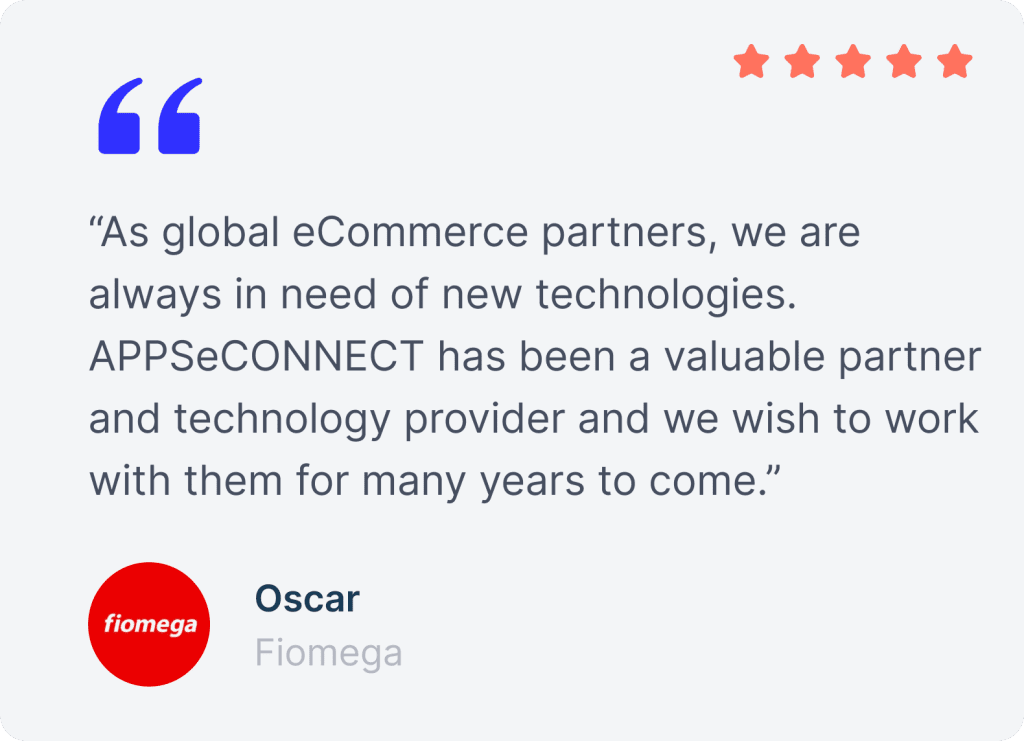
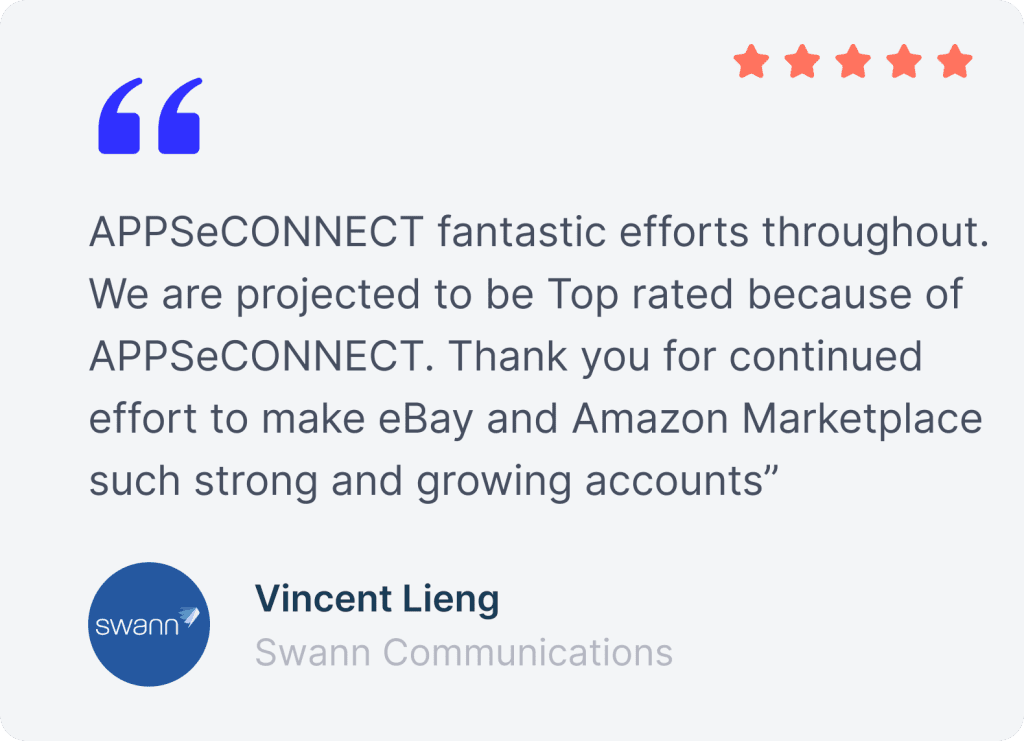
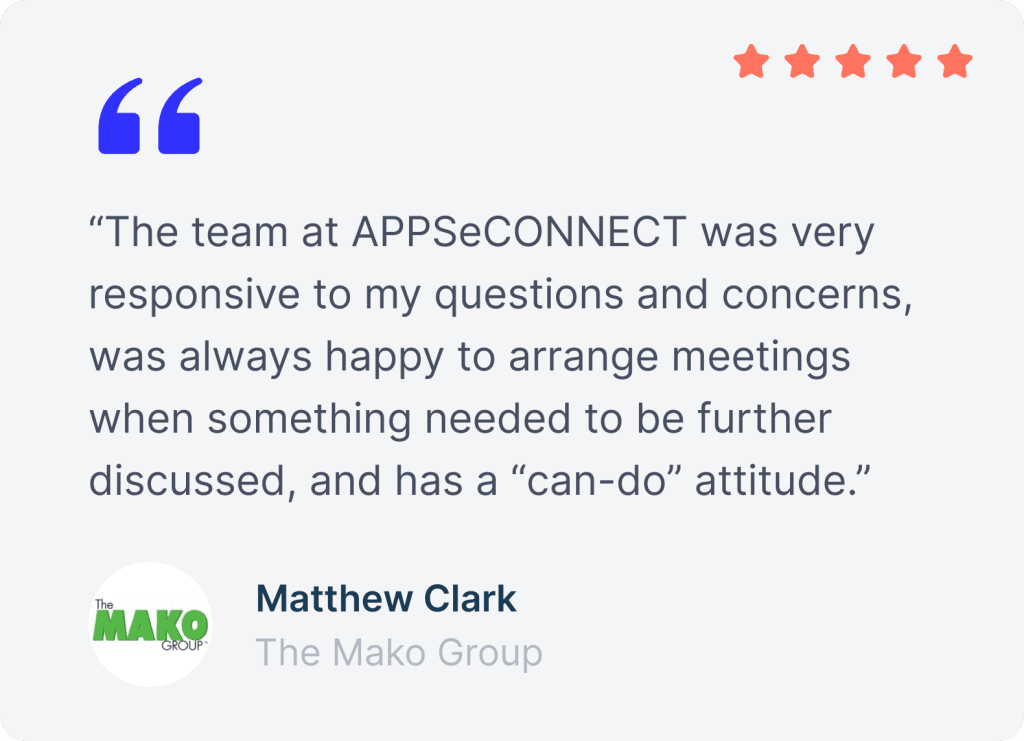
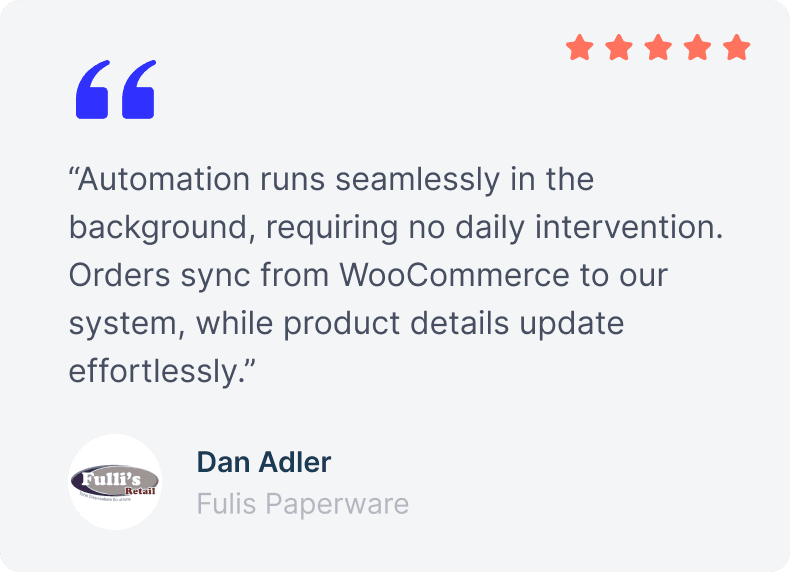
How QTC teams are closing faster with APPSeCONNECT
Nothing Can Stop Your Revenue Team When QTC Just Works
Connect your CRM, ERP, billing, and finance systems. Automate every handoff from quote to recognized revenue. And give your sales and finance teams the speed and accuracy they deserve.