




Integrate Your Business Apps with ERP
Make your ERP the single record your whole business runs on. APPSeCONNECT connects your ERP to your CRM, online store, marketplace, and shipping tools, so orders, inventory, pricing, and invoices move on their own. No retyping. No stale numbers.

Trusted By 1500+ Fast Growing Brands Worlwide















Understand the Basics
What is ERP Integration?
ERP integration connects your ERP to the other systems your business runs, such as your CRM, online store, marketplace, warehouse, and accounting tools. Your ERP stays the master record, and the connected systems read from it and write back to it, so everyone works from the same orders, inventory, and pricing.

Make Your ERP the Source of Truth
Your ERP already holds your real orders, stock, and pricing. Integration keeps every other tool matched to it, so there is one number teams can trust.

Move Data Without Retyping
Orders, customers, and invoices flow between systems on their own, so staff stop copying the same details by hand.

Real-Time or Scheduled
Pick instant updates for urgent changes like a new order, or timed syncs for large batches. You choose per flow.
Reasons to Integrate
Why Businesses Connect Their ERP
Teams do not integrate for the technology. They do it to stop the daily problems that come from an ERP that cannot talk to the rest of the stack. Here is what drives the decision.
Orders Get Rekeyed by Hand
An order placed online should not be typed into the ERP again. Manual entry is slow and invites mistakes on quantity, price, and address.
Stock Numbers Do Not Match
When the store and the ERP hold different counts, you either oversell or hold back sales. One synced number fixes both.
Finance Waits on Sales Data
Invoices and payments lag when orders sit in another system. Connecting the ERP keeps the books current.
Teams Argue Over the Right Number
Sales, finance, and operations each trust their own tool. With the ERP as the record, everyone sees the same figure.
Growth Means More Manual Work
More orders and channels should not mean more data-entry staff. A connected ERP handles the volume for you.
Why APPSeCONNECT
Why Teams Choose APPSeCONNECT to Integrate Their ERP
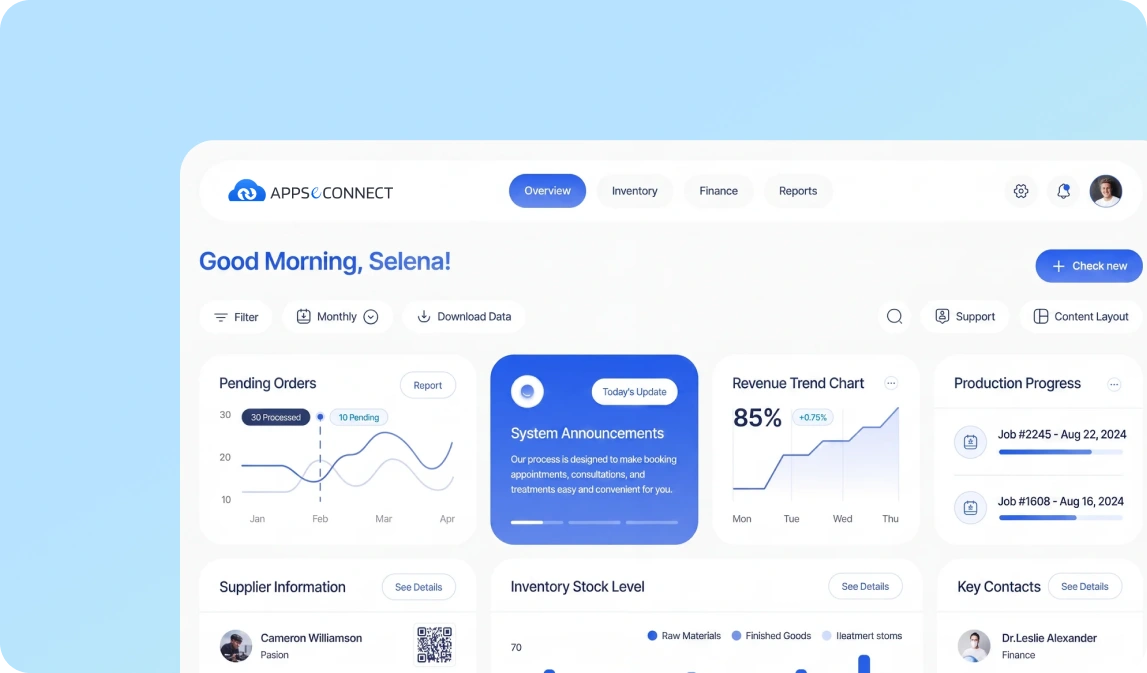
APPSeCONNECT is an ERP-first integration platform built for businesses that need real-time data flow across sales, finance, operations, and fulfillment. Our low-code iPaaS ships with tested connectors, so you skip months of custom API work and go live in weeks.
Ready Connectors for Leading ERP Systems
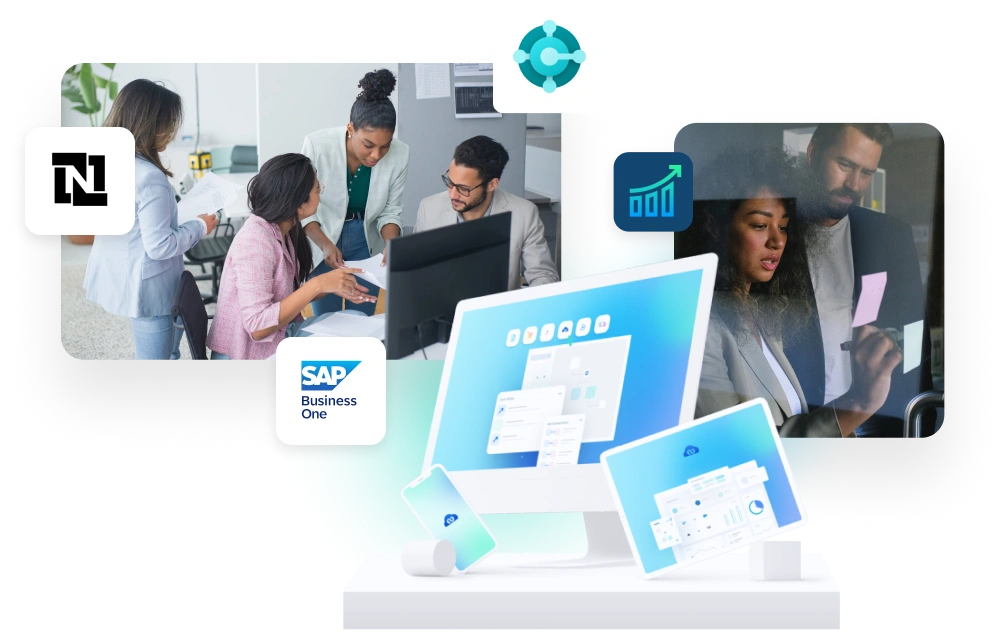
APPSeCONNECT connects the ERP systems most businesses run, including SAP Business One, Microsoft Dynamics Business Central, NetSuite, and Sage 300. You start from tested templates, not a blank page.
Your ERP Stays the System of Record
Other tools work around your ERP, not against it. That keeps pricing, stock, and customer data clean and owned by the right teams.
Low-Code ProcessFlow Designer
Map fields, build logic, test flows, and launch them without deep coding. Business users can follow along, and technical teams can add custom rules.
Strong Security and Stable Performance
AES-256 for stored data, TLS 1.2 in transit, ISO 27001 and SOC 2 Type II, GDPR support, and 99.9% uptime.
Our Solutions
ERP Integration Services We Offer
Our services cover every common ERP integration pattern, all on the same low-code platform, with shared monitoring, security, and support.

ERP with eCommerce Integration
Sync orders, products, pricing, and inventory between your ERP and your online store, so the store always shows what you can actually ship.

ERP with CRM Integration
Connect sales activity to your ERP for full order-to-cash visibility, from first quote to final invoice.

ERP with Marketplace Integration
Pull orders and inventory from your marketplaces into your ERP, so multi-channel sales stay in one place.

ERP with POS Integration
Send store sales, payments, and stock updates back to your ERP, so retail and finance stay aligned.

ERP with Shipping and Warehouse
Move orders out to fulfillment and bring returns and tracking back to the ERP, so operations run without spreadsheets.

ERP with Accounting Integration
Keep invoices, payments, and reconciliation flowing between your ERP and accounting tools.
Featured Integrations
Every System, Connected to Your ERP
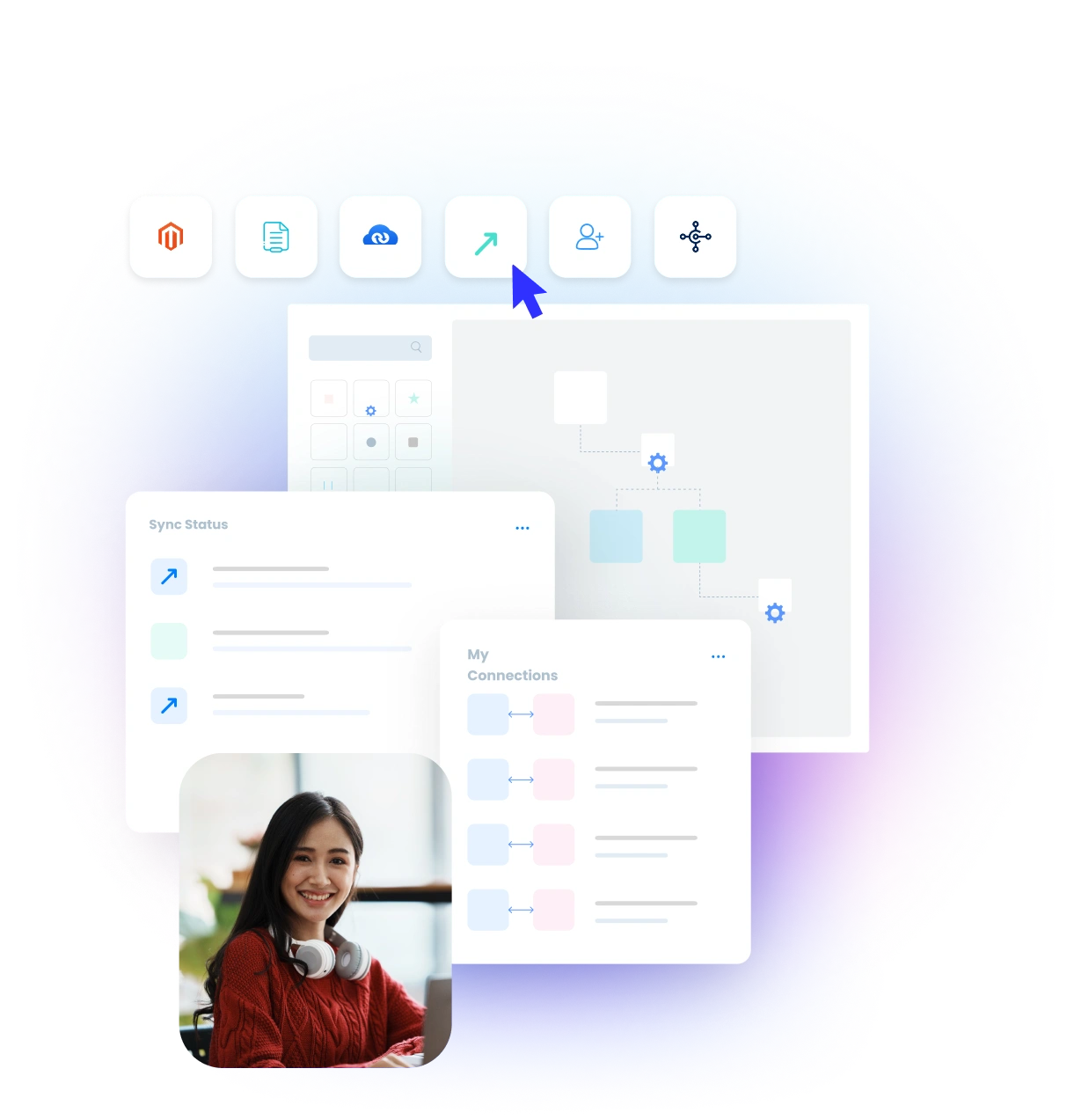
We support the ERP and business systems your team already runs. Each one ships with ready-made templates that connect to your ERP as the source of truth.





Do not see your system here? APPSeCONNECT includes a Connector SDK for building custom adapters.
See Business Benefits
Key Benefits by Connecting Your ERP
When your ERP feeds the rest of your stack, the whole business runs faster from order to cash. Here are the outcomes our customers report.

Smoother Work Across Teams
Many business tasks cross more than one department. A sales order affects stock, shipping, and billing, so each step needs the next one to move on time. ERP integration helps those steps move together instead of waiting for separate handovers and follow-up messages.






Our Process
How Our ERP Integration Process Works
We follow a simple five-step process so you launch with confidence.

Map Your ERP Setup
Identify your ERP, its version, and how it is deployed. Then map the systems it needs to feed, such as your store, CRM, marketplace, and shipping tools.

Define the Most Important Data Flows
Choose the flows that matter most first, such as orders, inventory, customers, and invoices. Decide which move one way and which move both ways.

Choose the Right Integration Method
Some updates need to happen right away, others can run on a schedule. We support event-based, scheduled, and mixed flows.

Configure Field Mapping and Business Rules
Use ProcessFlow Designer to match fields, apply value changes, and set the rules behind each flow, including tax, currency, pricing, and exceptions.

Go Live, Monitor, and Improve
After testing, live flows run from one dashboard. Review errors, retry failed records, and extend to more systems over time.
Industry Use Cases
Industries That Rely on a Connected ERP
ERP integration looks different from one business to another. A distributor moving thousands of orders needs a different setup than a manufacturer tracking production. APPSeCONNECT supports both.

Manufacturing
Connect sales, production, and finance to the ERP, so quotes, orders, and inventory stay in step.

Wholesale and Distribution
Handle large order volumes, repeat buyers, and warehouse updates with the ERP as the single record.

Retail and eCommerce
Keep your store, stock, and orders matched to the ERP, so buyers see accurate availability and get faster fulfillment.

Food and Beverage
Track stock, pricing, and orders across channels, so perishable and fast-moving goods stay accurate.

Automotive and Parts
Keep complex catalogs, pricing, and orders synced between the ERP and every sales channel.

Health and Life Sciences
Connect orders, billing, and compliance records to the ERP for accurate, traceable operations.
Testimonials
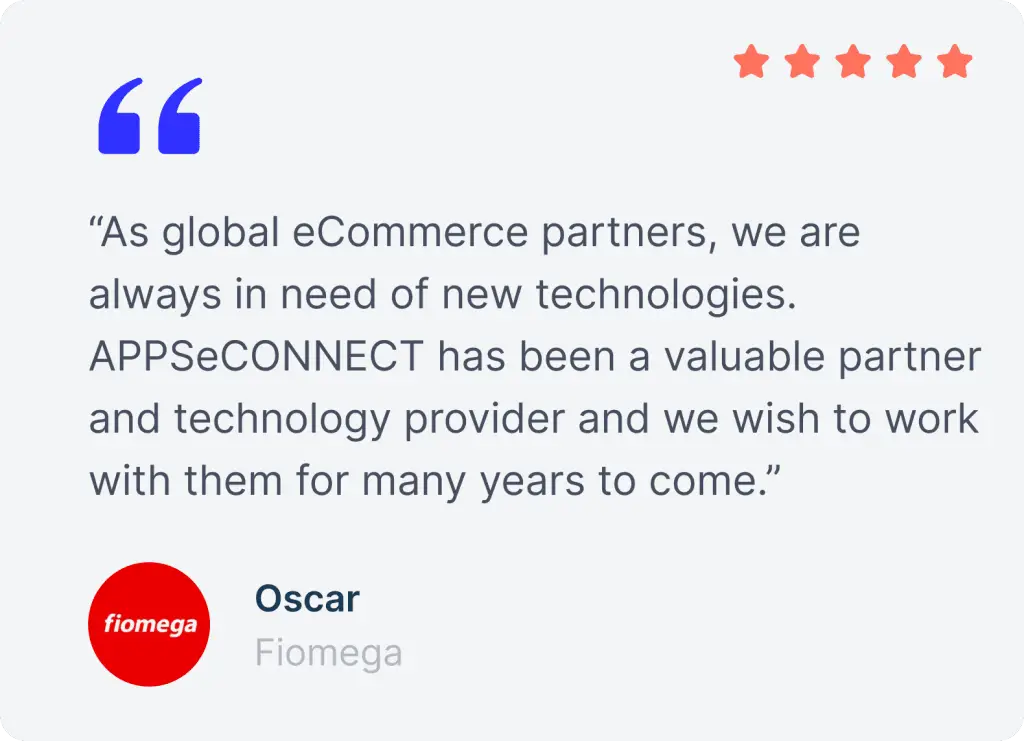
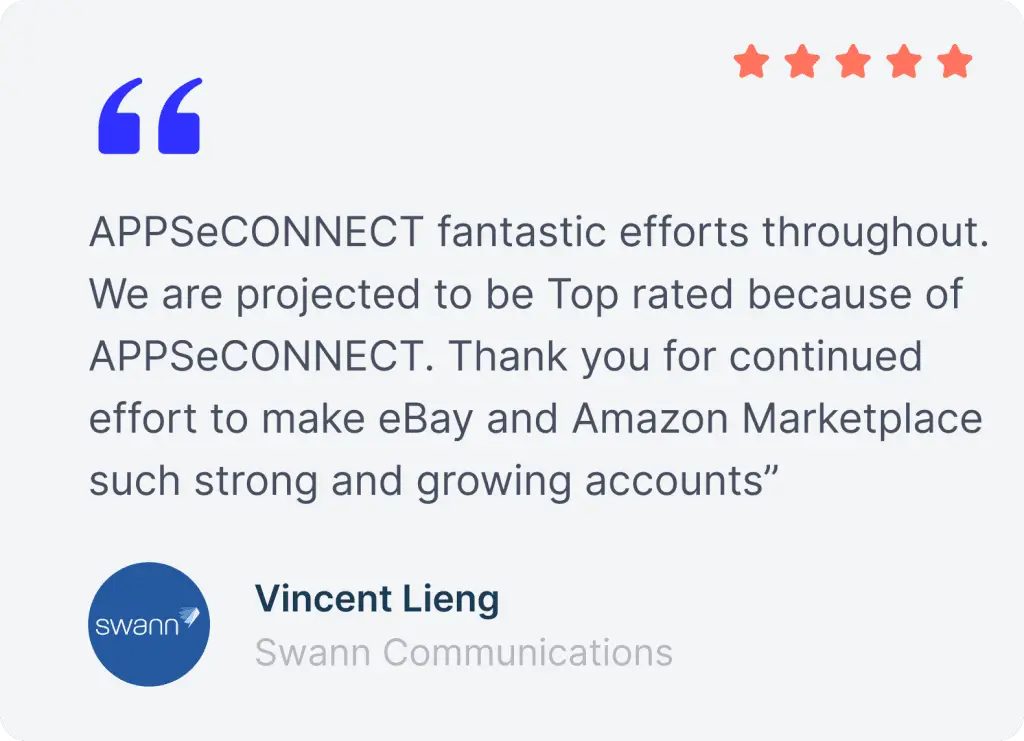
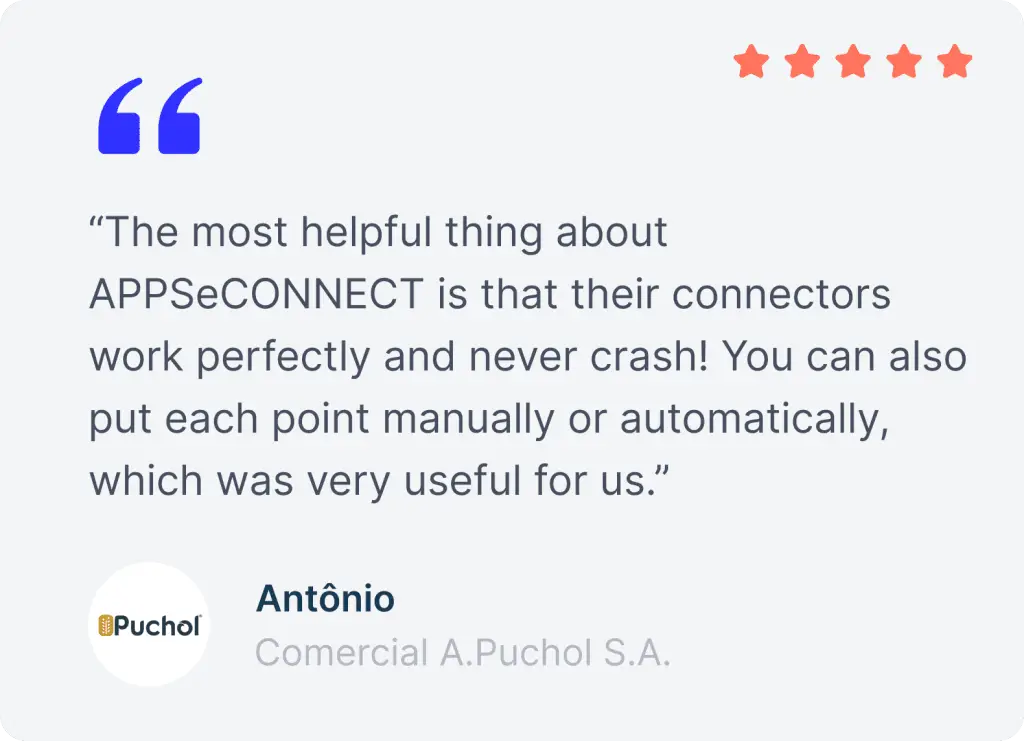
What Our Customers Say About ERP Integration
Businesses use APPSeCONNECT to make their ERP the record their whole stack runs on, without adding manual steps.
Start Your ERP Integration Journey Today
Stop rekeying orders and chasing numbers. APPSeCONNECT connects your ERP to your store, CRM, and marketplace, so data moves on its own. Start with ready-made templates and room to scale.
FAQs
Frequently Asked Questions
Answers to the most common questions from SAP Business One + HubSpot CRM teams before booking a demo.
What ERP systems does APPSeCONNECT support?
APPSeCONNECT supports SAP Business One, SAP S/4HANA, SAP ECC, Microsoft Dynamics 365, NetSuite, Sage 300, Epicor, Infor, and other ERP setups.
How long does ERP integration take to implement?
Common flows can launch within days when ready templates fit your needs. Larger projects with custom fields and more systems usually take longer.
Can APPSeCONNECT integrate both cloud and on-premises ERPs?
APPSeCONNECT supports cloud ERP and local ERP setups in the same project, so teams can connect old and new systems together.
What is the difference between ERP integration and ERP customization?
ERP integration connects your ERP to other tools. ERP customization changes the ERP itself, which often takes more time and can complicate upgrades.
How does ERP and eCommerce integration work?
ERP and eCommerce integration sends orders, stock changes, prices, and shipment updates between your store and ERP without repeated uploads or manual entry.
How does ERP and CRM integration improve sales performance?
ERP integration with CRM gives sales teams live access to pricing, order history, credit status, and open invoices, which helps them quote faster.
How much does ERP integration cost?
Cost depends on your ERP, the systems you connect, and the flow complexity. APPSeCONNECT offers tiered plans and custom pricing for larger needs.