




Rule-Based Automation
Rule-Based Automation
The quiet backbone underneath every ERP workflow that has to run every time
Some things in your business should never need a decision. The order comes in, the data syncs, the invoice goes out. Not sometimes. Every single time, without variation. APPSeCONNECT ProcessFlows make rule-based automation visual, predictable, and auditable from end to end. You define the logic once. The platform runs it exactly that way, as many times as your business demands.

Trusted by
1500+ Fast Growing Brands
Worldwide
















What is Rule-Based Automation?
Rule-based automation follows a fixed set of instructions, every single time, without deviation. You define a trigger, attach conditions, and wire in the actions that follow. When the trigger fires and the conditions are met, the system runs exactly what you told it to. No guesswork. No variation.
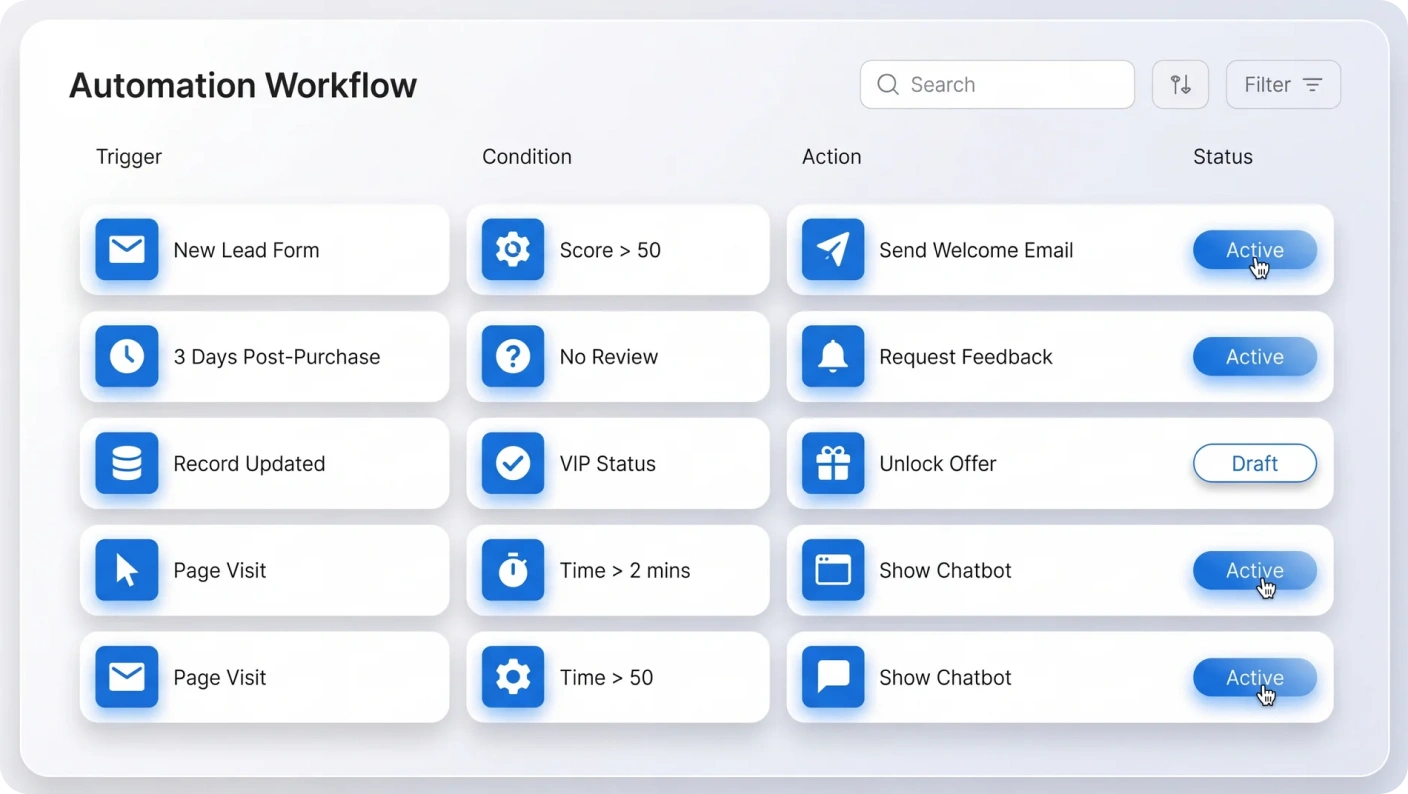
Trigger, Condition & Action
Every rule-based workflow is built on three parts, a trigger that starts the process, conditions that determine whether it should run, and actions that execute when those conditions are met. Once set, the system does not interpret or improvise. It just runs.
Predictable, Explainable, And Priced Like A Line Item

Predictable
Same input always produces the same output. No ambiguity, no drift. That consistency is what makes rule-based flows reliable enough to run unsupervised at scale.

Explainable
Every decision the flow makes can be traced back to a rule you defined. Compliance teams, auditors, and operations leads can all see exactly what happened and why, without decoding a black box.

Cost effective
Rule-based flows run cheaply per execution. High-volume, low-complexity processes are the natural home for this model, which is why most ERP integration workloads sit here. APPSeCONNECT pricing reflects that reality.
APPSeCONNECT’s Visual Automation Built for Real Workflows
Four things happen in sequence, every time a rule based flow executes.
Understanding these steps is what lets you design flows that are reliable under production conditions, not just in testing.
How does rule-based automation actually run?
Four things happen in sequence every time a rule-based flow executes. Understanding these steps is what lets you design flows that are reliable under production conditions, not just in testing.

Fires on a Trigger
Every flow starts with a defined event. Triggers in APPSeCONNECT come from three sources, a real-time webhook, a scheduled polling interval, or a manual API call. When the trigger fires, it hands the data payload to the next node. Nothing runs before it fires, nothing runs speculatively in the background. That determinism is what keeps rule-based automation low-cost to operate at scale.
Checks Its Conditions
Once the trigger fires, the flow evaluates your conditions using standard Boolean logic. AND, OR, and nested condition groups are all supported. You can filter on any field in the incoming payload, including calculated fields. If conditions are met, the flow proceeds. If not, it exits, routes to an alternate branch, or fires a notification, depending on how you have configured it.
Runs Clean Actions
Actions are the execution layer. Creating a sales order in SAP, updating a CRM record, pushing an invoice, posting a fulfilment confirmation. If an action fails, the retry engine kicks in automatically with configurable back-off intervals. After exhausting retries, the record is marked as failed, the error is written to the audit log, and the failure surfaces in your dashboard. No silent failures. No data loss.
Logs Everything
Every execution produces a complete, timestamped log. The trigger event, condition evaluation, each action call, response from the destination system, and any errors with full detail. The log is immutable and cannot be edited after the fact. It serves as your audit trail for compliance reviews and your source of truth for debugging. All data is stored and governed under SOC 2 Type II and ISO 27001 certification.
Ready to see a ProcessFlow running live?
We show you a real flow against your actual ERP, connecting to your systems. Not slides, not a sandbox with demo data. Your actual environment in 30 minutes.
Why Rule-Based Flows Still Carry Most Of The Work?
AI automation gets the attention. Rule-based automation does the volume. In any ERP-driven business, the majority of integration events are structured, predictable, and repeatable. That is exactly where rule-based flows thrive and where they deliver the highest value per integration dollar spent. Runs the same way every time, given the same input, a rule-based flow always produces the same output. That reproducibility is the foundation of operational trust. Your ERP data is accurate. Your team can build processes on top of the integration without worrying that it will behave differently on Tuesday. For high-compliance environments, the predictability of rule-based execution is not optional. It is the requirement, and it is built in by design.

Reliability
Runs the same way every time
Given the same input, a rule-based flow always produces the same output. Your ERP data stays accurate, your team can build processes on top of the integration with confidence, and nothing behaves differently on a Tuesday. In high-compliance environments, that predictability is not a nice-to-have. It is the requirement, and it is built in by design.
Where Rule-Based Flows Hit Their Limit?
Rule-based automation handles predictable volume exceptionally well. Three situations expose their structural boundaries, and knowing them helps you design your integration architecture correctly from the start.
Every Edge Case Needs Mapping
A rule-based flow can only handle scenarios that were anticipated when it was designed. If an unexpected combination of conditions arrives, the flow stops and flags it. For most core ERP workflows the variants are finite and knowable, but for frequently changing workflows the mapping burden adds up fast.
Messy Inputs Cause Failures
Rule-based flows expect the right field name, the right data type, the right structure. A malformed payload or an unexpected null will fail at validation. APPSeCONNECT provides data validation and transformation nodes to handle common formatting issues, and AI-augmented flows can clean messy inputs before they reach the rule-based layer.
More Scale, More Branches
As your business grows, your rules multiply. New customer tiers, new regions, new compliance requirements each add branches and condition groups to existing flows. APPSeCONNECT addresses this through modular flow design, reusable transformation templates, and AI-based routing for decisions that outgrow a purely rule-based structure.
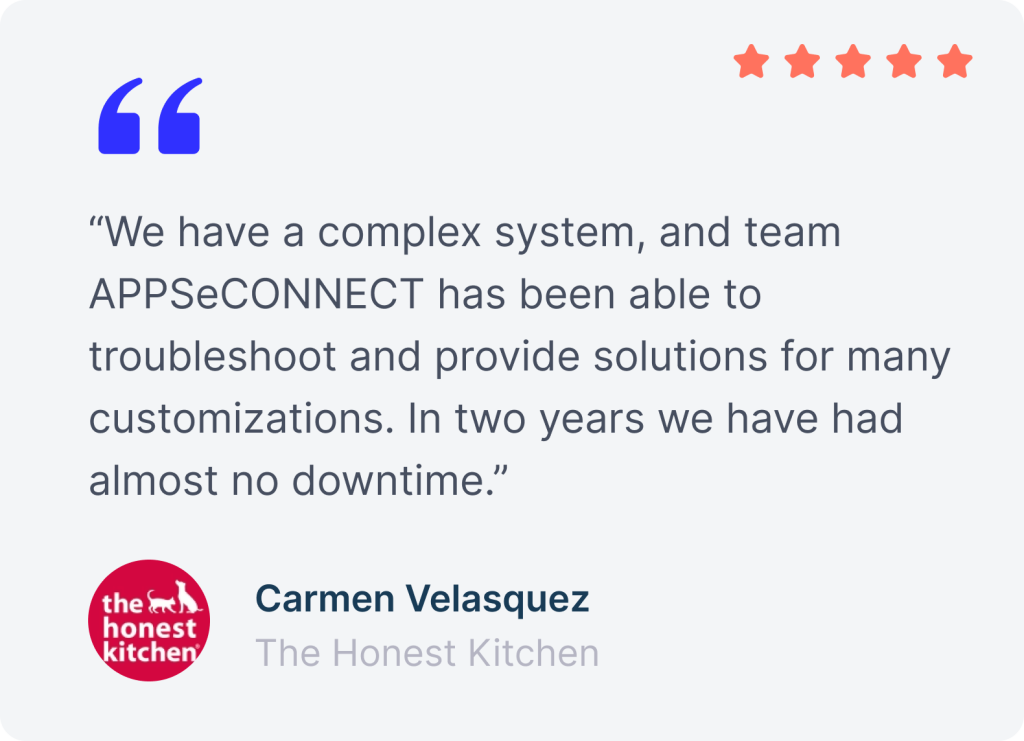
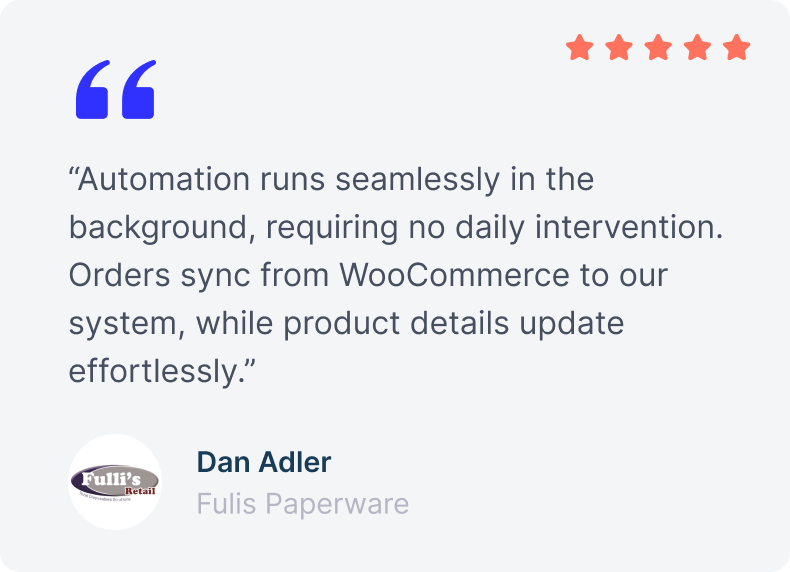
Customer Success Stories
What Our Customers Say:




• Enterprise Security
How Security Runs Through Every APPSeCONNECT Flow?
Rule-based flows handle your most critical business data. Every APPSeCONNECT flow operates inside an enterprise security architecture that was built specifically for the sensitivity of ERP environments. These are audited certifications, not checkbox marketing.
Start With The rule-based Flow That Has To Run Every Time
Your highest-volume, most critical integration processes do not need AI to be reliable. They need a deterministic flow that runs the same way every time, is cheap to operate at scale, and gives your compliance team a complete audit trail. Build that first. APPSeCONNECT ProcessFlows are how teams at 1,500+ brands have done exactly that, connecting SAP, Dynamics, NetSuite, and every major eCommerce and CRM platform with pre-built templates that deploy in days, not months.
Ready to Get Started?
Book a personalized demo or start your 30-day free trial. Our integration experts will reach out.