



SugarCRM and QuickBooks Integration and Automation
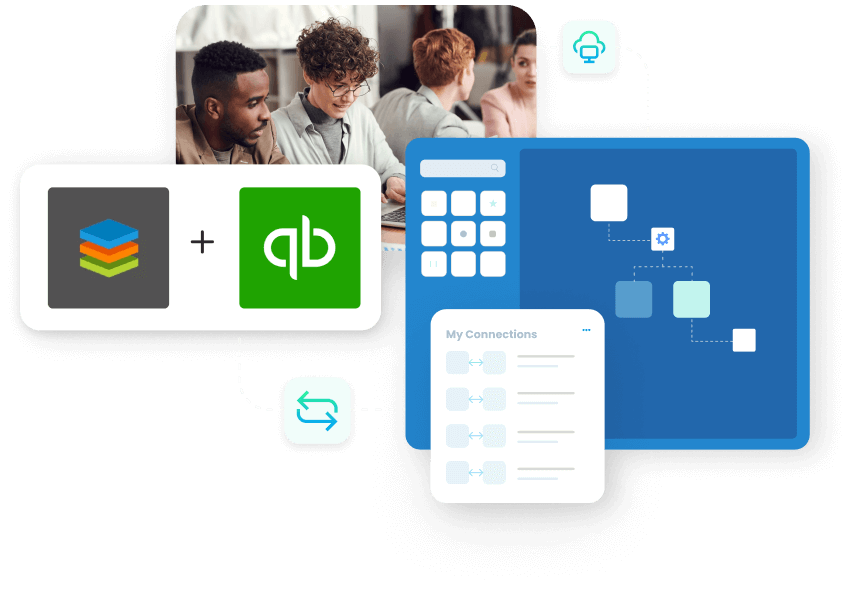
SugarCRM and QuickBooks integration keeps customer, quote, invoice, and payment data aligned between your CRM and your accounting system, and APPSeCONNECT gives you a governed platform to move that data both ways without copy-paste between teams. Accepted SugarCRM quotes create QuickBooks invoices, QuickBooks payment and status updates surface back inside CRM, and customer and product records stay matched across both systems through managed workflows.
Key Benefits
Why APPSeCONNECT Is the Gold Standard for SugarCRM and QuickBooks Integration SugarCRM and QuickBooks integration needs more than a one-time data push. Records must move with the right customer match, tax and price logic, duplicate checks, monitoring, and recovery controls. APPSeCONNECT connects both systems through configured ProcessFlows, so accounts, contacts, quotes, invoices, payments, and product data move between SugarCRM and QuickBooks with mapping, validation, retry, and audit visibility in one governed layer.

Keep Customer and Contact Records Aligned Both Ways
Account, contact, address, and ownership details can move between SugarCRM and QuickBooks with mapped rules, so sales and finance work from matched records instead of recreating customers in each system.

Turn Accepted Quotes Into QuickBooks Invoices
Accepted SugarCRM quotes can create QuickBooks invoices with line items, quantities, pricing, and tax mapped, reducing re-entry when a deal moves from sales into billing.

Surface Invoice and Payment Status Inside CRM
QuickBooks invoice status, due dates, open balances, and payment updates can flow back into SugarCRM, so account teams see billing context without leaving the CRM.

Keep Products, Items, and Pricing Consistent
Item catalogs, descriptions, and price lists can stay matched between QuickBooks and SugarCRM, so quotes and invoices use the same product and pricing data.

Support QuickBooks Online and Desktop Workflows
The same connector approach can be configured for QuickBooks Online or QuickBooks Desktop editions, based on how your finance team runs its accounting process.

Track, Retry, and Resync Exceptions
Logs, node status, API responses, and resync options through the Sync Info dashboard help teams see what happened, correct the cause, and rerun affected records with more control.
Standard Features Covered in Our SugarCRM and QuickBooks Integration Template
APPSeCONNECT supports SugarCRM and QuickBooks integration across customer, sales, and billing workflows, with product and tax data included. The setup can follow your SugarCRM configuration and QuickBooks process, and it can be planned around your field mappings, duplicate rules, and review process.
- SugarCRM Accounts → QuickBooks Customers New or updated CRM accounts can create or update QuickBooks customer records. The flow can include billing and shipping address, contact, and account reference details.
- QuickBooks Customers → SugarCRM Accounts Customer changes from QuickBooks can refresh SugarCRM account records, so CRM users work with current accounting-side customer information.
- SugarCRM Contacts → QuickBooks Contacts CRM contact details such as name, email, phone, and role can map to the related QuickBooks customer record.
- Vendor Creation From SugarCRM → QuickBooks Vendor records from CRM can populate QuickBooks to support purchasing workflows where the process requires it.
- SugarCRM Quotes → QuickBooks Estimates and Invoices CRM quotes can map into QuickBooks estimate or invoice records, with product lines, quantities, discounts, and tax carried across.
- Accepted SugarCRM Quotes → QuickBooks Invoice Creation When a quote is marked accepted in SugarCRM, the flow can create the matching QuickBooks invoice so billing starts without manual re-entry.
- Sales Order and Line Item Mapping Order and line detail can move with the quote, keeping quantities, pricing, and tax consistent between the CRM record and the accounting document.
- QuickBooks Invoices → SugarCRM Invoice headers and lines can sync into SugarCRM. Invoice number, amount, due date, status, and open balance can be shown to account teams.
- QuickBooks Payments and Credits → SugarCRM Payment receipts and credit memos can post back into SugarCRM to reflect current customer balances and receivables.
- Status Back-Sync for Collections Due dates, totals, and balance updates can surface in CRM so teams can prioritize follow-up on open invoices.
- QuickBooks Items → SugarCRM Products Item and service records, SKUs, descriptions, and price changes from QuickBooks can update SugarCRM product data.
- Product and Price List Alignment Product tiers and approved pricing can stay matched across systems so quotes and invoices draw from consistent catalog data.
- Tax and Class Mapping Tax codes, classes, and regional settings can be mapped between both systems so quote and invoice data moves with fewer corrections.
- Duplicate Prevention and Conflict Handling Last-run checkpoints and record-match rules can help prevent duplicate customers and invoices, and conflicts can be resolved through configured priority rules.
Popular SugarCRM and QuickBooks Integrations and Automations
SugarCRM and QuickBooks integration often becomes part of a larger sales and finance stack. Businesses can connect ERP systems, eCommerce platforms, marketplaces, payment tools, and reporting applications around SugarCRM and QuickBooks workflows. Common related integrations include SugarCRM with SAP Business One and SugarCRM with Microsoft Dynamics NAV.
Popular SugarCRM Integrations
Our Integration Platform helps you seamlessly connect SugarCRM with other Business Applications.

Popular Quickbooks Integrations
Connect QuickBooks with other business applications.
Looking for a Specific Integration?
INTEGRATION BROCHURE
Download the SugarCRM and QuickBooks Integration Brochure
Get the complete reference on how APPSeCONNECT connects SugarCRM and QuickBooks, from data flows and mappings to go-live steps.
Inside you’ll find:
- Integration Flows and Mappings: How customer, quote, invoice, payment, product, and tax records move between SugarCRM and QuickBooks, with field mapping references.
- Flow Planning: Source and target direction for CRM-to-accounting and accounting-to-CRM workflows.
- Rollout Approach: Start with customer and contact sync, then extend into quotes, invoices, payments, and product data.
- Testing Checklist: Validate sample accounts, contacts, quotes, invoices, payments, and retry scenarios before launch.
- Monitoring and Recovery: How the Sync Info dashboard, auto-retry, and resync support post go-live operations.
Real-world use cases
Use Cases
APPSeCONNECT’s SugarCRM and QuickBooks integration is built for sales, finance, and operations teams that need cleaner records across CRM and accounting. The goal is to reduce double entry and keep quote-to-cash moving without manual handoffs.
Scenario: Sales teams quote and hand off to billing without re-entry
Sales teams using SugarCRM need quotes to move into QuickBooks billing without copying records by hand. Customer status, product data, and pricing all influence how the quote should be built and billed.
- CRM accounts can stay aligned with QuickBooks customer records.
- Product and price data can support consistent quote lines.
- Accepted quotes can create QuickBooks invoices with mapped tax.
- Line items and totals can carry across without re-entry.
What this integration handles
Synced
Customer and contact data
Mapped
Product and price details
Checked
Tax and line logic
Prepared
Quote-to-invoice handoff
Supports field sales, inside sales, and quote-driven B2B teams.
Scenario: Account teams see invoice and payment context without asking finance
Billing activity often stays in QuickBooks, while customer follow-up happens in SugarCRM. Integration helps account teams view billing context before they discuss renewals, collections, or new orders.
- QuickBooks invoices can be visible inside SugarCRM.
- Payment status, due dates, and open balances can support follow-up.
- Payments and credit memos can post back to reflect current balances.
- Logs and snapshots can support reconciliation and exception review.
What this integration handles
Visible
Invoice and due date data
Reflected
Payment and credit status
Matched
Balance and receivable updates
Auditable
Logs and snapshots
Supports finance, collections, and account teams that need cleaner billing visibility.
Scenario: Records stay connected across CRM and accounting
Revenue and operations teams need to see which CRM deals became QuickBooks invoices and which invoices were paid, without stitching exports together.
- CRM records can connect with QuickBooks customer and invoice data.
- Product and pricing data can stay aligned across systems.
- Duplicate prevention rules can reduce mismatched records.
- Sync results can be reviewed through the Sync Info dashboard.
What this integration handles
Connected
CRM and accounting records
Aligned
Product and pricing data
Guarded
Duplicate prevention rules
Reviewed
Sync logs and status
Supports revenue operations, sales leadership, and reporting teams.
Workflow
How Does the Workflow Run End-to-End
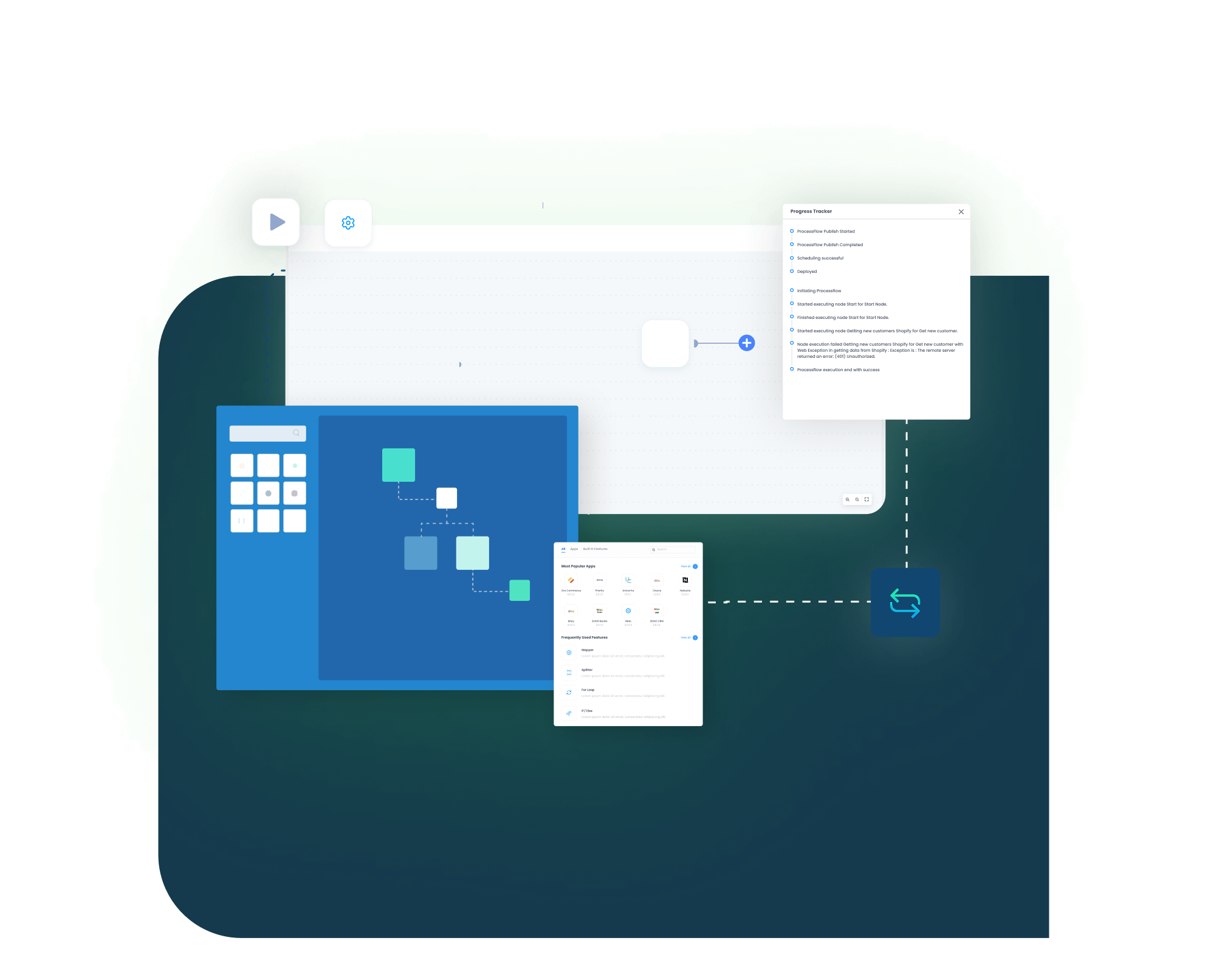
Our SugarCRM and QuickBooks integration runs through ProcessFlows. Each ProcessFlow defines the source system, target system, entity, connector action, field mapping, validation rules, run mode, retry behavior, and monitoring path before any record moves.
Trigger and Source Connection
The flow can begin through a real-time event, scheduled run, or manual run. The source can be SugarCRM or QuickBooks depending on the process.
Data Extraction and Schema Reading
The workflow reads the selected source entity and its schema. This may be an account, contact, quote, invoice, payment, product, or tax-related record.
Transformation and Field Mapping
Source data is converted into the target format, applying customer-match, price, tax, and product-mapping rules.
Validation and Business Rule Execution
The record is checked before posting. The flow can validate customer matching, duplicate rules, product codes, tax logic, and required fields.
Target Push and Response Handling
The prepared record is sent to SugarCRM or QuickBooks, and the response is captured with success state, failure reason, and sync status.
Monitoring, Retry, and Resync
The Sync Info dashboard tracks success and error rates, auto-retry handles transient failures, and missed records can be resynced after the cause is corrected.
Meet appse ai
How appse ai Helps Streamline SugarCRM and QuickBooks Integration
A working SugarCRM and QuickBooks integration reduces manual transfer, but teams still manage failed records, mapping changes, changing data volumes, and repeated checks. appse ai adds AI-assisted support for designing workflows, spotting issues earlier, and reducing manual review across connected processes.
- Workflow Design: Help teams describe a process and shape the workflow structure around it, especially when new entities or connected systems are added.
- Issue Detection: Spot broken flows, error patterns, and records that need review before they become daily cleanup work.
- Exception Review: Review missing fields, mapping gaps, and validation errors with clearer transaction context.
- Billing Clarity: Make invoice, payment, and balance-related updates easier to review across SugarCRM and QuickBooks.
- API Coordination: Support workflows where SugarCRM, QuickBooks, and other systems share data through managed APIs.
- Teams Stay in Control: AI-assisted support helps the process while teams set the rules and decide how records move.

Frequently Asked Questions
SugarCRM and QuickBooks integration connects CRM and accounting records so customer, quote, invoice, and payment data can move between both systems. APPSeCONNECT can sync accounts, contacts, quotes, invoices, payments, products, and tax data between SugarCRM and QuickBooks through configured workflows.
Businesses integrate SugarCRM with QuickBooks to reduce double entry and keep sales and finance working from the same records. It helps limit duplicate customers, quote and invoice re-entry, billing delays, and gaps in payment visibility, while each system keeps its own role.
The integration can support accounts, contacts, quotes and estimates, sales orders, invoices, payments, credit memos, products and items, and tax data. The final scope depends on the SugarCRM configuration and the QuickBooks process.
The sync can run in both directions where the process requires it. For example, customer records can move both ways, while invoices and payments typically flow from QuickBooks into SugarCRM for account visibility. Each object’s direction is set during mapping.
The connector approach can be configured for QuickBooks Online or QuickBooks Desktop editions. The supported edition and specific version details should be confirmed for your setup with the APPSeCONNECT team.
APPSeCONNECT can use record-match rules and last-run checkpoints to help prevent duplicate customers and invoices. When conflicts occur, configured priority rules determine how the record is resolved before it posts.
APPSeCONNECT connects SugarCRM and QuickBooks through configured ProcessFlows. Each flow defines the source, target, entity, field mapping, validation rules, run mode, retry behavior, and monitoring path.
When a sync fails, APPSeCONNECT provides logs, node status, and API responses through the Sync Info dashboard. Auto-retry handles transient failures, and teams can correct missing fields or mapping issues and resync the affected records.
Start by identifying the records that create the most manual work, such as customer sync, quote-to-invoice creation, and payment status updates. APPSeCONNECT can then help map, configure, test, monitor, and scale the integration.
Ready to Launch Your SugarCRM and QuickBooks Integration Today?
SugarCRM and QuickBooks should not leave sales and finance working from different versions of customer, quote, invoice, and payment data. APPSeCONNECT helps connect CRM activity with accounting records through structured workflows, so teams can reduce double entry and speed up billing across the quote-to-cash process.

Companies automating their business through APPSeCONNECT







Customer Success Stories
Hernon
With APPSeCONNECT, Hernon achieved a zero business downtime and levaraged the power of a fully automated and integrated solution to ensure business growth.
Read Case Study →
Machinery Manufacturing Company
Discover how a world-leading industrial equipment manufacturing company leveraged APPSeCONNECT for company-wide automation of ERP, CRM, and eCommerce applications.
Read Case Study →Related Resources
Articles and Guides to Help You With Your Integration and Automation Journey