


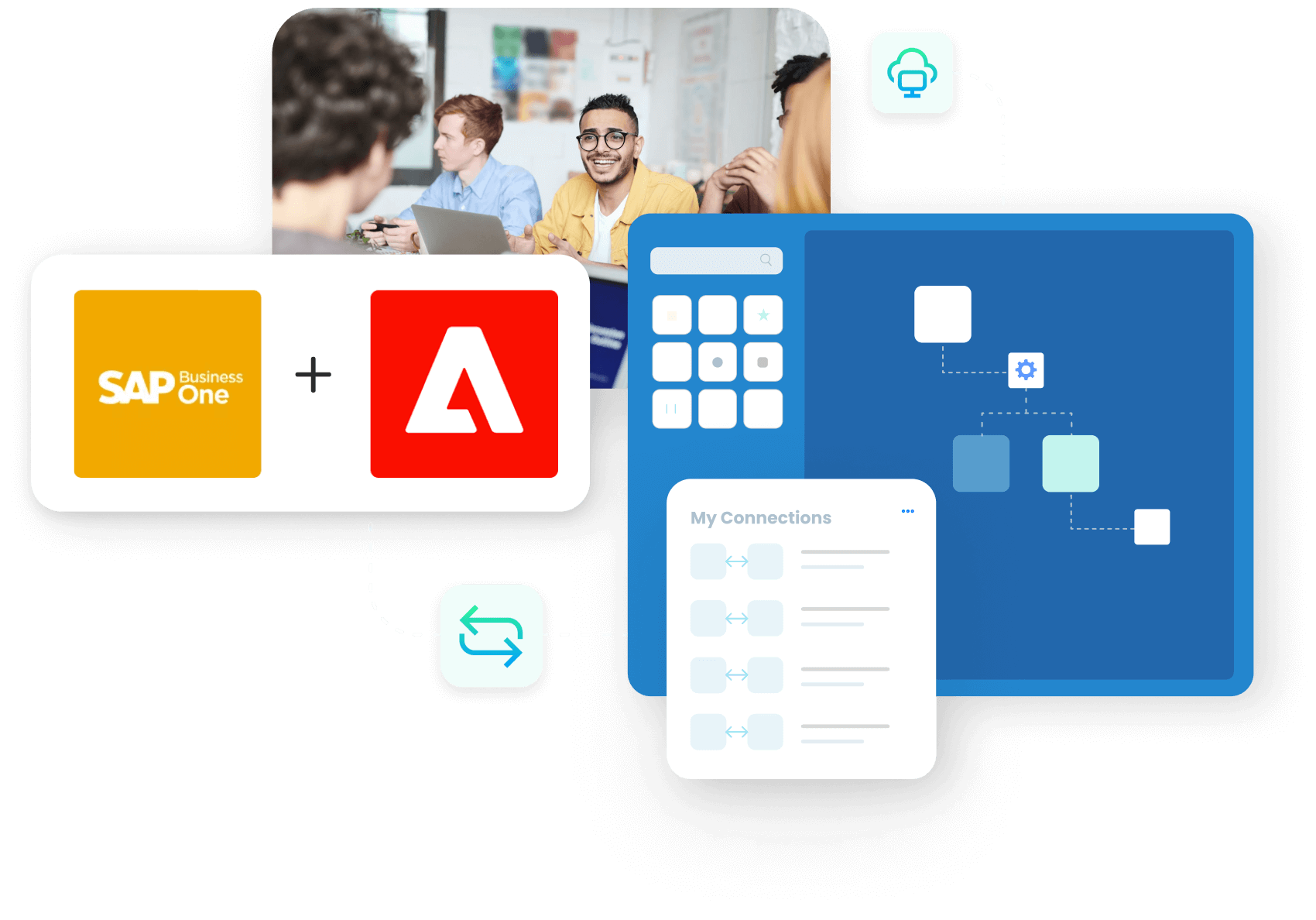
SAP Business One and Magento Integration and Automation
- Automate
- Simplify
- Grow
SAP Business One and Magento integration connects your storefront with the ERP that controls items, stock, pricing, customers, invoices, and payments. APPSeCONNECT moves Magento orders, products, inventory, pricing, and customer data between both systems through managed integration flows, so online selling follows SAP Business One rules instead of becoming a second version of operations.
SAP Business One usually controls item masters, price lists, warehouse stock, customer and business partner records, invoices, and payments. Magento is where buyers search, add to cart, place orders, and expect fast updates. When these records stay apart, teams deal with manual order entry, stale storefront stock, pricing drift, catalog mismatches, and finance reconciliation that takes too long.
BUSINESS VALUE
Why APPSeCONNECT Is the Gold Standard for SAP Business One and Magento Integration
A SAP Business One and Magento integration needs more than a basic data transfer. eCommerce orders, catalog records, and stock values must move with the right structure, validation, and recovery controls. The platform gives both systems a managed integration layer where ProcessFlows, mappings, connector actions, logs, snapshots, and retry settings work together to keep order, product, inventory, and finance data moving with control. appse ai adds another layer by helping teams design flows, detect issues, review exceptions, and improve automation after go-live.
Orders Wait Outside ERP
Magento orders need to become SAP Business One sales orders before fulfillment and finance can act on them. The platform helps move order details into SAP B1 with customer, item, tax, discount, shipping, and payment references intact.
Storefront Stock Goes Stale
Magento may keep selling against stock that SAP Business One already sees as committed or unavailable. The platform helps update storefront availability from SAP B1 inventory so buyers see a closer stock picture.
Prices Split Across Systems
SAP B1 price lists, discounts, currencies, and customer-specific pricing can drift when Magento is maintained separately. The platform helps Magento follow ERP-approved pricing instead of relying on manual updates.
Catalog Logic Breaks
SAP B1 item data and Magento product data need to agree on SKUs, item codes, product web IDs, categories, attributes, and product types. The platform helps reduce catalog mismatch by keeping product movement tied to mapped ERP records.
B2B Rules Get Missed
Magento B2B accounts often depend on SAP B1 business partners, contact persons, credit limits, sales reps, special prices, and tier prices. The platform helps those account rules reach Magento so online buying does not bypass ERP controls.
Finance Loses Traceability
Finance teams need a clear path from Magento order to SAP B1 sales order, invoice, payment, tax, and shipping records. The platform gives teams a cleaner trail to review, while appse ai can surface recurring errors and exception patterns.
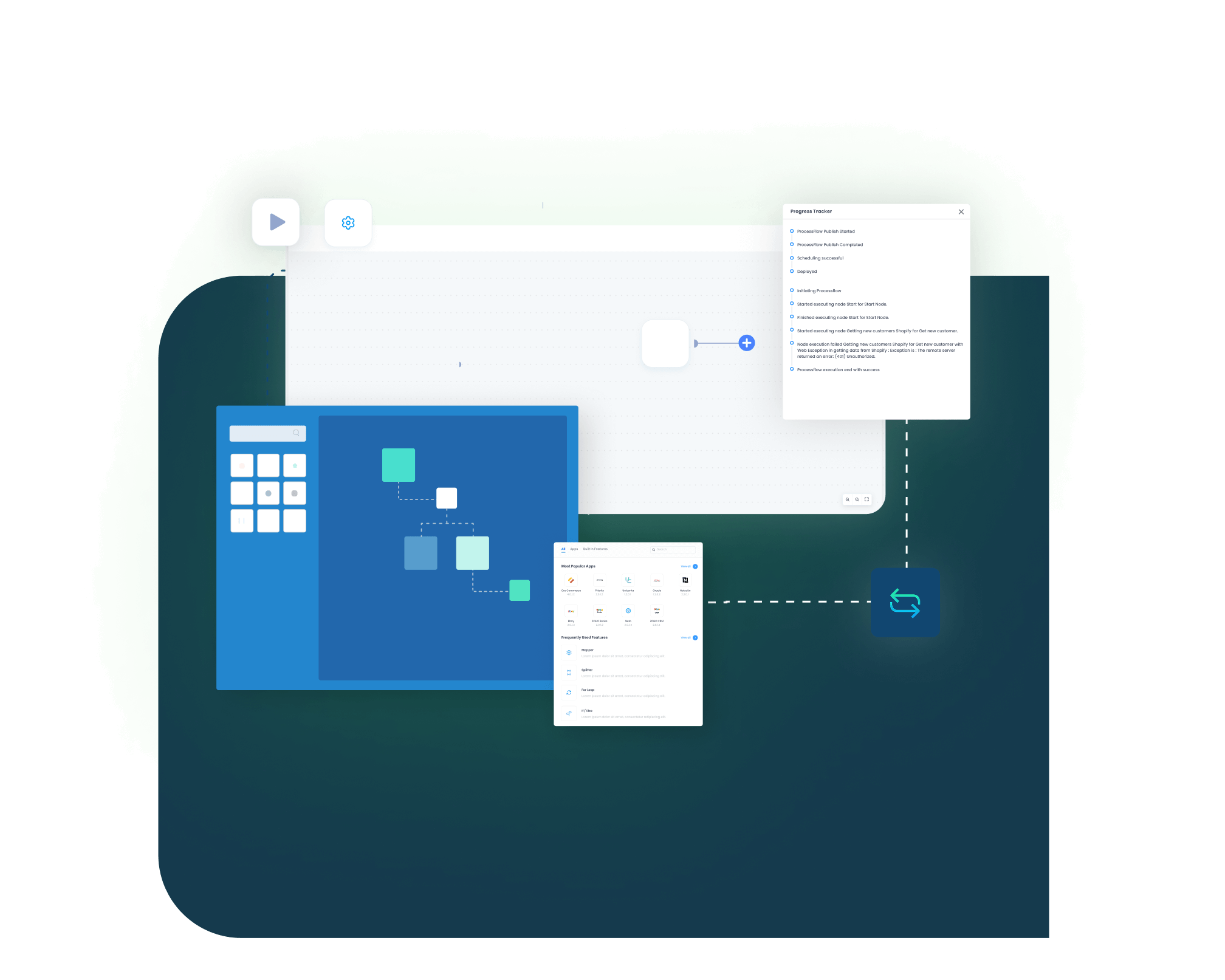
Standard Features Covered in Our SAP Business One and Magento Integration Template
This SAP Business One and Magento integration can be configured around the records that decide how your store sells and how your ERP fulfills. That includes item masters, Magento products, warehouse stock, price lists, tax classes, customer groups, business partners, shipments, invoices, and payments. The final setup can follow your SAP B1 configuration, Magento edition, and the workflows you enable.
Magento Orders → SAP B1 Sales Orders
Magento orders can be created in SAP Business One as sales orders with customer data, item lines, quantity, price, discount, tax, shipping charge, and Magento order reference.
Magento Customers → SAP B1 Customers
Magento customer and address data can create or update SAP B1 customer records based on configured matching rules.
SAP B1 Items → Magento Products
SAP B1 item data can sync to Magento product records. Simple, grouped, and configurable product scenarios can be supported where product structure is mapped.
Magento Master Data → SAP B1 Setup
Magento websites, categories, customer groups, tax classes, countries, attributes, attribute sets, and attribute options can sync as setup data before transactions run.
SAP B1 Inventory → Magento Stock
Warehouse stock from SAP Business One can update Magento availability by item code and mapped inventory logic.
SAP B1 Price Lists → Magento Pricing
SAP B1 price lists can update Magento product pricing. Quantity discounts, currency-specific prices, and discount rules can be mapped where needed.
SAP B1 Shipments → Magento Orders
Shipment details from SAP B1 can update Magento with tracking number, carrier code, and order reference data.
SAP B1 Invoices → Magento Status
Invoices generated in SAP Business One can update Magento order status and give commerce teams better post-order visibility.
Magento Payments → SAP B1 Payments
Magento payment details can be mapped into SAP Business One incoming payment records with invoice, customer, and payment reference details.
SAP B1 Partners → Magento Companies
SAP B1 business partners can sync to Magento company accounts with customer ID, name, email, address, and contact details.
SAP B1 Contacts → Magento Users
Contact persons from SAP Business One can sync to Magento and remain linked to the right company account.
SAP B1 Price Lists → Magento B2B
SAP B1 price lists can sync to Magento B2B with website, price list name, status, and factor details.
SAP B1 Special Prices → Magento
Customer-specific special prices can move to Magento with company, product, discount type, date range, and price list details.
SAP B1 Tier Prices → Magento
Quantity-based tier prices from SAP Business One can support Magento B2B buying scenarios.
SAP B1 Sales Reps → Magento Accounts
Sales reps maintained in SAP B1 can sync to Magento and link with assigned company customers.
SAP B1 Credit Limits → Magento
Credit limits from SAP Business One can support Magento account-level purchase controls.
Popular SAP Business One and Magento Integrations and Automations
SAP Business One and Magento integrations often sit beside CRM, warehouse, shipping, tax, payment, marketplace, and reporting systems. Businesses can extend the setup to 3PL platforms, carrier tools, product information systems, multi-channel commerce apps, and custom operational systems where the workflow requires them.
Popular SAP Business One and Magento Integrations and Automations
Connect SAP B1 with other business applications.
+
SAP Business One and Shopify
+
+
+
Popular Magento (Adobe Commerce) Integrations
Connect Magento (Adobe Commerce) with other business applications.
+
+
+
+
INTEGRATION BROCHURE
Download the SAP Business One and Magento Integration Brochure
Get the brochure for planning SAP Business One and Magento integration across eCommerce and ERP workflows. It outlines how Magento orders, SAP sales documents, item and product data, price lists, inventory, shipments, invoices, payments, and B2B account records can be organized before rollout.
Inside You'll Find
- Integration Architecture: See where SAP Business One and Magento fit in the connected flow and how order, product, price, stock, shipment, invoice, and payment records can move.
- Flow Planning: Identify which systems should send data to SAP B1 and which should receive updates from it. Sales, finance, inventory, warehouse, and B2B account teams can be mapped into the plan.
- Rollout Approach: Begin with the flows that protect daily selling first. Order sync and inventory updates can come early, followed by product, pricing, shipment, invoice, and B2B account flows.
- Testing Checklist: Check Magento order mapping, SAP item matching, warehouse rules, price list logic, tax classes, payment references, shipment data, and retry behavior before launch.
- Operational Readiness: Prepare teams to review run history, inspect snapshots, track failed records, and rerun transactions after go-live.
INTEGRATION GUIDE
How Does the Workflow Run End-to-End?
A SAP Business One and Magento integration runs through configured ProcessFlows. Each ProcessFlow defines the source application, target application, object, connector action, schema, transformation logic, validation steps, run mode, retry setting, and monitoring path before a record is exchanged. Flows can run in near real time from Magento events or on a configured schedule.
01
Trigger & Source Connection
A Magento event, a schedule, a manual run, or another configured trigger can start the flow. The source system changes based on whether the record starts in Magento or SAP Business One.
02
Data Extraction & Schema Reading
The connector reads the selected source object and its schema. The object may be an order, customer, item, product, inventory update, price list, shipment, invoice, payment, category, or tax class.
03
Transformation & Field Mapping
The source record is reshaped for the target system. Item code, SKU, customer ID, address, tax, price, warehouse, carrier, payment, invoice, and product web ID fields can be mapped.
04
Validation & Business Rule Execution
The flow checks whether the record is ready to post. It can review item validity, customer matching, warehouse mapping, tax class logic, price list rules, discount conditions, payment references, and B2B account data.
05
Target Push & Response Handling
The prepared record is sent into SAP Business One or Magento. The response is captured with success status, failure reason, transaction detail, and sync result.
06
Monitoring, Retry & Audit Logging
Logs, snapshots, node status, and transaction details show what happened during each run. Failed records can be corrected and retried without rebuilding the full flow.
Start Integration at just $99 per month with Shopify, Salesforce, HubSpot, Zoho, WooCommerce and more.
Enterprise-grade integration powered by hands-on support without enterprise pricing
Real-world use cases
Use Cases
APPSeCONNECT’s 3PL Central integration is built for businesses that need warehouse operations and connected systems to work as one controlled process. It supports 3PL warehouses, fulfillment providers, eCommerce sellers, distributors, finance teams, and customer operations teams.
eCommerce Retail
Online Orders Reach SAP B1 With Fewer Manual Fixes
Retail teams need Magento orders to become usable SAP Business One sales orders quickly. Customer details, item lines, tax, discounts, payment references, and shipping charges should not be rebuilt after checkout.
- Magento orders can create SAP B1 sales orders with line-level detail.
- SAP B1 stock can refresh Magento availability.
- Product and price changes can follow ERP records.
- Shipment and invoice updates can return to Magento.
Supports retailers using Magento for online sales and SAP Business One for operations, inventory, and finance.
What this integration handles
Connected
Magento order capture
Mapped
Customer, item, tax, and shipping fields
Updated
ERP-led stock visibility
Completed
Shipment and invoice feedback
Manufacturing & Distribution
SAP B1 Item Control Supports Magento Selling
Manufacturers and distributors use SAP Business One for item setup, warehouse stock, fulfillment, and pricing. Magento gives buyers a digital place to browse and order, but the storefront still needs clean ERP-backed data.
- SAP B1 items can be published to Magento products.
- Warehouse stock can update storefront availability.
- Price lists and discounts can support online pricing.
- SAP B1 shipment data can update Magento tracking.
Supports manufacturers, distributors, dealers, and mixed B2B/B2C sellers using SAP Business One with Magento.
What this integration handles
Synced
Item and product data
Controlled
Warehouse availability
Priced
ERP price lists
Tracked
Carrier and delivery updates
Wholesale & B2B Commerce
Magento Accounts Follow SAP B1 Customer Rules
B2B commerce depends on account accuracy. Magento company accounts need to respect SAP Business One business partners, contact persons, price lists, sales reps, credit limits, and special prices.
- SAP B1 business partners can create Magento company accounts.
- Contact persons can remain linked to the correct company.
- Special prices and tier prices can support account buying.
- Credit limits and sales rep links can follow ERP records.
Supports wholesalers, distributors, sales teams, and Magento B2B portals tied to SAP Business One.
What this integration handles
Synced
Business partners and contacts
Mapped
Special and tier prices
Assigned
Sales rep relationships
Controlled
Credit limit rules
Finance & Order-to-Cash
Magento Revenue Connects Back to SAP B1 Documents
Finance teams need a clear path from Magento order to SAP B1 sales order, invoice, payment, tax, and shipping record. When those references stay together, reconciliation becomes easier to review.
- Magento order values can move into SAP B1 sales documents.
- Payment references can be mapped to incoming payments.
- SAP B1 invoices can update Magento order status.
- Logs and snapshots can help audit failed or corrected records.
Supports finance, accounting, tax, audit, and operations teams that need cleaner order-to-cash traceability.
What this integration handles
Matched
Order and payment references
Posted
Invoice status updates
Mapped
Tax, discount, and shipping data
Auditable
Logs and retry history
Meet appse ai
How appse ai Helps SAP Business One and Magento Integration
Once SAP Business One and Magento are connected, the work does not stop at basic data sync. Teams still need to understand failed records, repeated mapping issues, missing values, slow runs, and process gaps. appse ai adds AI-assisted support for designing workflows, spotting issues, reviewing exceptions, and improving flows over time.
Workflow Design
Help teams build or adjust SAP B1 and Magento automation flows, especially when new objects or connected systems are added.
Issue Detection
Identify repeated failures across orders, item updates, stock changes, price updates, invoices, payments, and account records before they become daily cleanup work.
Exception Review
Review missing fields, item mismatches, SKU issues, tax class errors, mapping gaps, and validation failures with clearer context.
Decision Support
Support routing and conditional logic around customer matching, warehouse selection, tax handling, pricing logic, payment references, and account-based rules.
Process Signals
Track patterns and recurring delays across orders, products, inventory, prices, shipments, invoices, payments, and B2B accounts.
API Orchestration
Coordinate SAP Business One, Magento, CRM, warehouse, finance, and custom system processes from the same automation layer where needed.
Workflow Optimization
Find flows that fail often, slow down at certain steps, or need stronger validation before posting.
Frequently Asked Questions
SAP Business One and Magento integration connects your Magento storefront with the SAP Business One ERP through controlled data workflows. It can move orders, customers, products, inventory, pricing, invoices, payments, and shipment data between both systems so online activity follows ERP records.
Businesses use this integration to reduce manual order entry, stock mismatches, pricing drift, catalog gaps, and finance follow-up work. It helps Magento selling activity stay closer to SAP Business One processes.
APPSeCONNECT connects the two systems through configured ProcessFlows. Each flow defines the object, direction, mapping rules, validation logic, run mode, retry settings, and monitoring path.
The integration can support orders, customers and business partners, products and items, inventory, price lists, invoices, payments, shipment and tracking updates, and B2B account data such as special prices and credit limits. The final scope depends on the SAP B1 setup and Magento edition.
Sync direction depends on the object. Orders and payments typically flow from Magento to SAP Business One, while products, inventory, pricing, invoices, and shipments typically flow from SAP B1 to Magento. Customer records can sync in both directions where configured.
The integration can support B2C storefronts and B2B portals. B2B flows can carry SAP Business One business partners, contact persons, special prices, tier prices, sales reps, and credit limits so account-based buying respects ERP controls.
Multi-store setups can be supported, with store-specific configuration for stock, pricing, and catalog. The exact arrangement should be confirmed during solution design.
SAP Business One runs on either Microsoft SQL Server or SAP HANA. The connection method and supported database should be confirmed for your specific SAP B1 environment during solution design.
Warehouse stock from SAP Business One can update Magento availability by item code and mapped inventory logic. Updates can run in near real time from events or on a configured schedule.
SAP B1 price lists can update Magento product pricing. Quantity discounts, currency-specific prices, special prices, and tier prices can be mapped where the workflow requires them.
Failed records can be reviewed through logs, snapshots, node status, and transaction details. Teams can correct missing fields, mapping errors, validation failures, or API responses before retrying the affected records.
appse ai can support workflow design, issue detection, exception review, decision support, API orchestration, and process optimization. It helps teams see where Magento and SAP B1 flows fail, slow down, or need stronger validation.
Start with the flows that affect daily operations first. Common starting points include order sync, inventory updates, product and price sync, and customer records. APPSeCONNECT can then help map, configure, test, monitor, and scale the integration.
Ready to Launch Your SAP Business One and Magento Integration Today?
SAP Business One and Magento should not operate as separate systems for orders, products, inventory, pricing, invoices, and payments. A structured integration connects the storefront with the ERP, so retail, B2B, warehouse, and finance teams can manage online order volume without adding more manual record work.
Companies automating their business through APPSeCONNECT
Customer Success Stories
With APPSeCONNECT, Hernon achieved a zero business downtime and levaraged the power of a fully automated and integrated solution to ensure business growth.
Related Resources
Articles and Guides to Help You With Your Integration and Automation Journey