


Microsoft Dynamics NAV and PrestaShop Integration and Automation
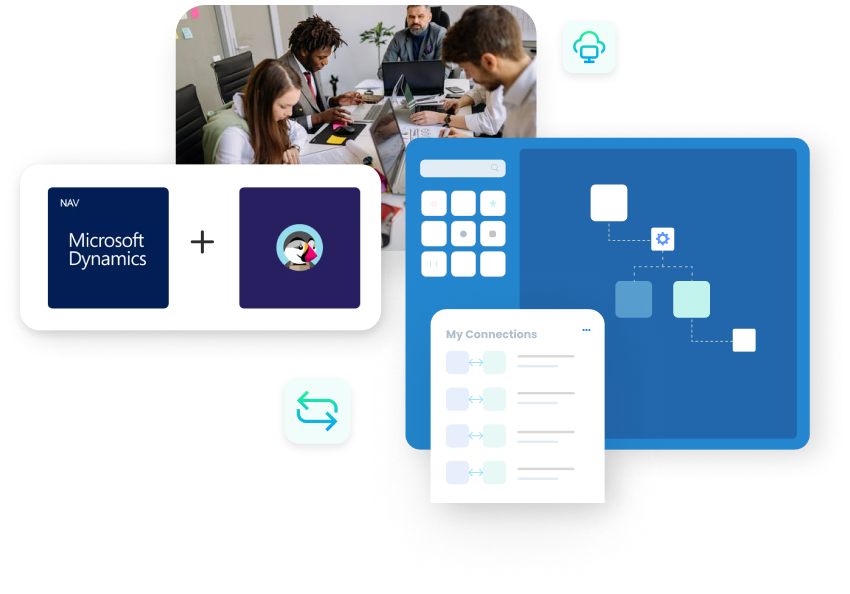
Microsoft Dynamics NAV and PrestaShop integration connects your online store activity with the ERP records that control orders, inventory, pricing, and fulfillment, and APPSeCONNECT gives you a governed platform to move that data without manual exports or custom scripts. PrestaShop customer registrations and orders create NAV records, NAV item and stock updates push out to the storefront, and shipment and tracking details sync back so buyers see current status.
Key Highlights
Why APPSeCONNECT Is the Gold Standard for Microsoft Dynamics NAV and PrestaShop Integration
Microsoft Dynamics NAV and PrestaShop work together through controlled integration workflows. The integration keeps storefront activity connected to NAV records, so sales, operations, and finance teams can process orders, maintain stock, and confirm shipments without depending on CSV imports or repeated manual checks.
Keep Customer Records Aligned Across PrestaShop and NAV
Guest and registered customer registrations, contacts, billing addresses, and shipping addresses can move from PrestaShop into NAV Customer Cards with mapped rules. This helps teams work from cleaner records instead of re-keying accounts in both systems.
Bring PrestaShop Orders Into NAV Without Re-entry
Web orders can create NAV Sales Orders with line items, quantities, unit price, tax, discounts, and customer references mapped. Order approval and validation rules can be applied during mapping so records post cleanly into NAV.
Keep Stock Aligned Across NAV and the Storefront
On-hand and committed inventory changes in NAV can update PrestaShop stock levels on a scheduled or event-driven basis, so the storefront works from a closer view of available inventory.
Push Product and Price Details to PrestaShop
NAV item records, including SKU, description, weight, images, and approved pricing, can be published to PrestaShop product listings, with price and product changes mapped where the flow requires them.
Return Shipment and Tracking Details to Buyers
NAV shipping method, freight charges, and tracking numbers can sync back to PrestaShop so customers can follow order progress without a support request.
Connect Multiple PrestaShop Stores to One NAV Instance
Several PrestaShop storefronts can map to a single NAV company or branch, so multi-store and multi-brand operations route orders and consolidate inventory without manual reconciliation.
Standard Features Covered in Our Microsoft Dynamics NAV and PrestaShop Integration Template
APPSeCONNECT supports Microsoft Dynamics NAV and PrestaShop integration across customer, order, product, stock, and shipment workflows, with invoice and payment visibility included where supported. The setup can follow your NAV configuration and PrestaShop store processes. It can also support multi-store mapping, tax and discount rules, field transformations, and custom workflow logic based on your project scope.
Customer and Account
- PrestaShop Customers → NAV Customer Cards: New or updated PrestaShop registrations can create or update NAV Customer Cards. The flow can include contact, billing address, shipping address, and account reference details.
- PrestaShop Guest Orders → NAV Customer Records: Guest checkout details can be mapped into NAV customer records so orders without a registered account still post with the correct buyer information.
- NAV Customer Updates → PrestaShop: Customer changes from NAV can refresh PrestaShop account details where the store workflow requires current ERP-backed information.
Order and Fulfillment
- PrestaShop Orders → NAV Sales Orders: Web orders can create NAV Sales Orders with order number, line items, quantities, unit price, tax, and discount details mapped.
- Order Approval and Validation → NAV Posting: Validation and approval rules can be applied during mapping, so required fields are checked and orders post cleanly into NAV.
- NAV Shipments → PrestaShop Tracking: Shipping method, freight charges, and tracking numbers from NAV can return to PrestaShop so buyers see live shipment status.
Product and Inventory
- NAV Items → PrestaShop Product Listings: NAV item master data, including SKU, name, description, weight, images, and price, can be published to PrestaShop listings.
- NAV Inventory → PrestaShop Stock Levels: On-hand and committed stock changes in NAV can update PrestaShop inventory on a scheduled or event-driven basis to reduce oversell risk.
- NAV Pricing and Discounts → PrestaShop: Approved price changes and discount logic can be mapped to the storefront so published pricing reflects the ERP record.
Commercial and Finance
- Tax and Discount Mapping: Tax categories, discount formulas, shipping charges, and currency values can be mapped between both systems so order totals move with fewer corrections.
- Invoice and Payment Visibility → PrestaShop: Invoice and payment reference details can be reflected in PrestaShop where the finance process supports that visibility.
- Multi-Store Routing → Single NAV Instance: Orders and inventory from several PrestaShop storefronts can route to one NAV company or branch, with per-store rules applied during mapping.
Popular Microsoft Dynamics NAV and PrestaShop Integrations
Microsoft Dynamics NAV and PrestaShop integration often becomes part of a larger commerce and operations stack. Businesses can connect other eCommerce platforms, marketplaces, CRM systems, POS, warehouse and 3PL tools, and finance applications around NAV and PrestaShop workflows, with NAV remaining the ERP system of record. NAV buyers often search using the Navision name, and the same integration approach applies whether your instance is branded Microsoft Dynamics NAV or Navision.
Popular Microsoft Dynamics NAV Integrations
Connect Microsoft Dynamics Nav with other business applications.
+
+
+
+
Popular PrestaShop Integrations
Looking for a Specific Integration?
View All Apps
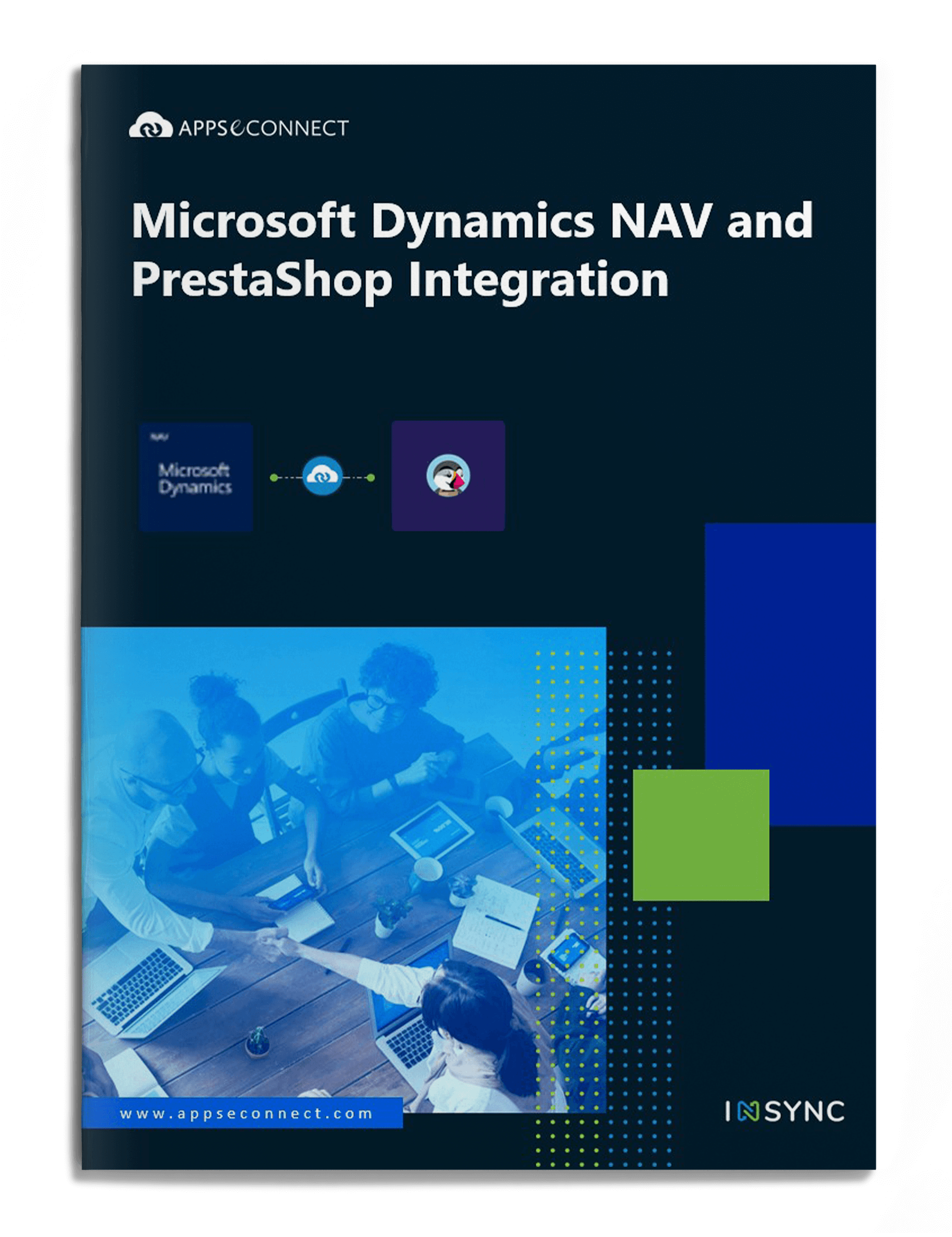
INTEGRATION BROCHURE
Download the Microsoft Dynamics NAV and PrestaShop Integration Brochure
Use the brochure to plan how Microsoft Dynamics NAV and PrestaShop can exchange customer, order, product, stock, invoice, and shipment records. It helps teams decide which system should own each process and how the integration should be rolled out.
Inside You'll Find:
- Integration Architecture: See how NAV and PrestaShop connect customer records, orders, items, inventory, pricing, invoices, and shipment tracking through prebuilt ProcessFlows.
- Flow Planning: Review the source and target direction for PrestaShop-to-NAV and NAV-to-PrestaShop workflows.
- Rollout Approach: Start with customer and order sync. Then extend into product and stock updates, pricing, shipment tracking, and multi-store routing.
- Testing Checklist: Validate sample customers, guest orders, items, stock updates, orders, tax and discount mapping, shipment tracking, and retry scenarios before launch.
- Operational Readiness: Prepare teams to monitor runs, review logs, inspect failed records, correct mapping issues, and retry transactions after go-live.
Real-world use cases
Use Cases
Retail
Scenario: A Single-Brand Store Keeps Stock and Orders Connected to NAV
Retailers running one PrestaShop storefront need orders, stock, and customer records to stay close to the NAV record so teams spend less time on manual exports and stock corrections.
- PrestaShop orders can create NAV Sales Orders with mapped tax, discount, and customer data.
- NAV inventory changes can update storefront stock levels to reduce oversell risk.
- New registrations can create NAV Customer Cards without re-entry.
- Shipment and tracking details can return to PrestaShop for buyer visibility.
Supports retailers running PrestaShop with Microsoft Dynamics NAV as the ERP backbone.
What this integration handles
Synced
PrestaShop orders into NAV
Updated
Inventory across store and NAV
Connected
Customer records between systems
Returned
Shipment tracking to the storefront
Wholesale & Distribution
Scenario: Bulk B2B Orders Move From PrestaShop Into NAV
Wholesalers and distributors need large or frequent PrestaShop orders to reach NAV with consistent pricing and less manual handling.
- High-volume orders can import into NAV with mapped line, price, and tax details.
- Customer-specific pricing and discount rules can be applied during mapping.
- Item and stock records can stay connected between NAV and the storefront.
- Parallel processing can support order volume during peak periods.
Supports wholesalers, distributors, and B2B sellers using NAV as the ERP system of record.
What this integration handles
Imported
Bulk PrestaShop orders into NAV
Mapped
Pricing and discount rules
Scaled
Order processing at peak volume
Updated
Item and stock records
Multi-Brand & Multi-Store
Scenario: Several Storefronts Route Into One NAV Instance
Operators running multiple PrestaShop stores across brands or regions need centralized data without managing each store separately.
- Multiple PrestaShop storefronts can map to one NAV company or branch.
- Inventory can consolidate across stores within a unified workspace.
- Pricing rules can apply centrally while orders route into NAV automatically.
- Logs and snapshots can help operations teams review sync results across stores.
Supports multi-brand retailers and multi-region operators using NAV as the shared ERP.
What this integration handles
Routed
Multi-store orders into one NAV instance
Consolidated
Inventory across storefronts
Applied
Central pricing rules
Audited
Sync logs and snapshots
Workflow
How Does the Workflow Run End-to-End
Our Microsoft Dynamics NAV and PrestaShop integration runs through ProcessFlows. Each ProcessFlow defines where the record starts, how the source schema is read, how fields are mapped, which business checks are applied, how the target system responds, and how teams review the transaction afterward.
Order Capture
A customer registers or places an order on the connected PrestaShop store.
Trigger and Source Connection
APPSeCONNECT receives a webhook or scheduled pull, validates the payload, and routes it through your ProcessFlow. The source can be PrestaShop or NAV depending on the process.
Data Extraction and Schema Reading
The workflow reads the selected source entity and its schema. This may be a customer, guest order, order, item, inventory update, price change, invoice, or shipment record.
Transformation and Field Mapping
Source data is converted into the target format. SKU, item number, quantity, unit price, tax, discount, customer, address, and status fields can be mapped, with transformation nodes handling currency or data-type conversions.
Validation and Target Push
The record is checked, then created or updated in NAV or PrestaShop. The connector captures the response with success state, failure reason, and transaction result.
Back-Sync, Monitoring, and Retry
Ship from NAV, return tracking numbers to PrestaShop, and update order status. Logs, snapshots, and node status support review, auto-retry handles transient failures, and missed records can be resynced after correction.
Meet appse ai
How appse ai Helps Streamline Microsoft Dynamics NAV and PrestaShop Integration
After Microsoft Dynamics NAV and PrestaShop are connected, teams still need to manage failed records, mapping changes, seasonal volume spikes, and repeated checks. appse ai can add AI-assisted support around workflow design, exception review, process signals, and workflow optimization while keeping NAV and PrestaShop controls in place.
Workflow Design
Help teams build or adjust automation flows with no-code tools and AI-assisted guidance, especially when new stores or entities are added.
Issue Detection
Help teams identify failed records, failed workflow runs, and repeated exception patterns across customer, order, stock, and shipment flows.
Order Tracking
Review order movement from the first PrestaShop sale through NAV posting, fulfillment, and tracking return across connected systems.
Stock and Finance Clarity
Make inventory, pricing, invoice, and payment-related updates easier to review across NAV and the storefront.
API Coordination
Support workflows where NAV, PrestaShop, and other systems share data through managed APIs.
Teams Stay in Control
AI-assisted support helps the process while teams set the rules and decide how records move.
Frequently Asked Questions
Microsoft Dynamics NAV and PrestaShop integration connects the NAV ERP with a PrestaShop store through controlled data workflows. APPSeCONNECT can move customers, orders, items, inventory updates, pricing, invoices, and shipment tracking between PrestaShop and NAV, with NAV staying the system of record.
Businesses integrate NAV and PrestaShop to reduce manual exports and keep ERP records aligned with the storefront. It helps limit duplicate records, delayed order processing, stock mismatches, and shipment follow-up work.
The integration can support customer records, guest and registered orders, item and product data, inventory updates, pricing and discounts, tax details, invoices and payment references, and shipment tracking. The final scope depends on the NAV setup and the PrestaShop store workflow.
Yes, depending on the process. Customers and orders typically move from PrestaShop into NAV, while items, stock, pricing, and shipment tracking move from NAV out to PrestaShop. Each ProcessFlow defines the direction for its entity.

Guest checkout details can be mapped into NAV customer records during the order flow, so orders placed without a registered account still post with the correct buyer and address information.
The integration is configured through prebuilt connectors and a no-code ProcessFlow Designer, with drag-and-drop field mapping and transformation nodes. Custom mappings, filters, and rules can be added where the process requires them, without rebuilding the integration from scratch.
Yes. Several PrestaShop storefronts can map to a single NAV company or branch, so multi-store and multi-brand operations can consolidate inventory and route orders while applying per-store rules.
Microsoft Dynamics NAV (formerly Navision) is the on-premises ERP that Microsoft succeeded with Dynamics 365 Business Central. Many teams still run NAV or Navision, and the integration approach described here applies to those instances. If your business runs Business Central, review the related Business Central integration options separately.
Failed records can be reviewed through logs, snapshots, node status, and API responses. Auto-retry with back-off handles transient issues such as API throttling, and teams can correct missing fields or mapping issues and resync the affected records.
Start by selecting the records that create the most manual work, such as customer sync, order sync, stock updates, pricing, and shipment tracking. APPSeCONNECT can then help map, configure, test, monitor, and scale the integration.
Ready to Launch Your Microsoft Dynamics NAV and PrestaShop Integration Today?
Microsoft Dynamics NAV and PrestaShop should not leave teams working from different versions of customer, order, stock, and shipment data. APPSeCONNECT helps connect storefront activity with ERP records through structured workflows, so teams can reduce manual exports and improve accuracy across the order-to-cash lifecycle.
Companies automating their business through APPSeCONNECT
Customer Success Stories
Related Resources
Articles and Guides to Help You With Your Integration and Automation Journey