


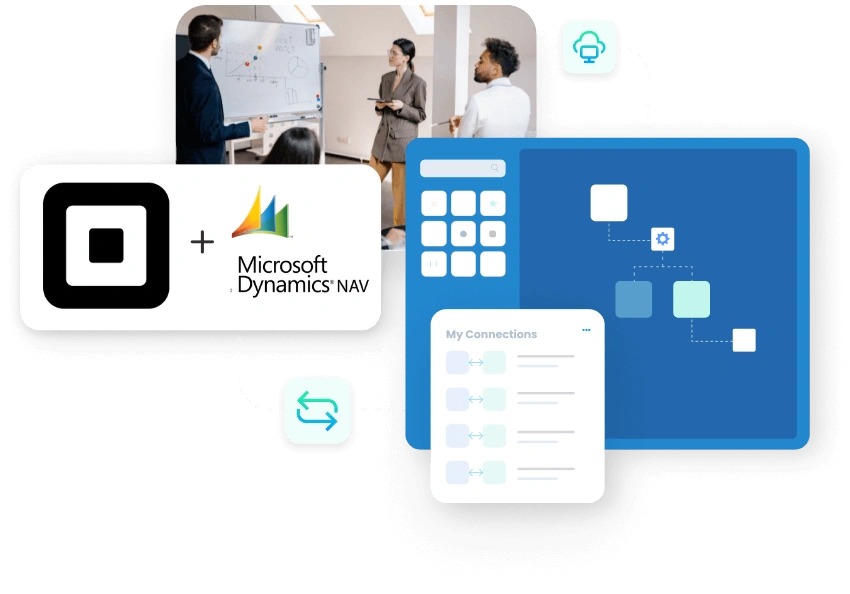
Square POS and Dynamics 365 NAV Integration & Automation
- Automate
- Align
- Accelerate
Square POS and Dynamics 365 NAV integration gives store transactions a controlled path into the ERP. Sales, refunds, payments, customer details, item updates, stock movement, and tax data can move through configured ProcessFlows so store and finance teams are not rebuilding register activity by hand.
Square POS handles checkout, tenders, refunds, and customer activity. Dynamics 365 NAV holds item records, inventory control, posting rules, tax logic, and finance reporting. When the two systems move separately, stock differences grow, payment review slows down, and refund or settlement exceptions become harder to trace.
KEY BENEFITS
Why APPSeCONNECT Is the Gold Standard for Square POS and Dynamics 365 NAV Integration
Our platform provides the integration layer that helps Square POS activity reach Dynamics 365 NAV in a controlled, reviewable way. Store transactions can move with the details finance and operations need, while NAV continues to hold the ERP-side rules for inventory, posting, reporting, and reconciliation. This reduces the spreadsheet work that usually appears between store close and back-office review.
Late Sales Posting
Store sales that stay inside Square after checkout can delay NAV updates. Finance teams then spend extra time entering or checking transaction totals before reports can be trusted.
Tender Reconciliation Gaps
Payment types, authorization references, refunds, and payout timing need the right context in NAV. When tender details move separately, finance teams must compare Square activity against ERP records manually.
Refund Tracking Breaks
POS refunds need to remain tied to the original sale, tax treatment, item record, and customer. A disconnected process makes credit review, restocking, and reporting harder to follow.
Store Stock Drift
Square sales and adjustments change the store view quickly. If NAV inventory is updated later, replenishment, transfer planning, and store availability can be based on different numbers.
Location Reporting Cleanup
Multi-store teams need transaction data by location, register, department, or dimension. Without mapping into NAV, each store can become a separate reporting cleanup exercise.
Tax Posting Risk
Square tax totals, discounts, fees, and refunds need to match NAV tax or VAT rules. Gaps in mapping can slow month-end checks and create avoidable finance review work.
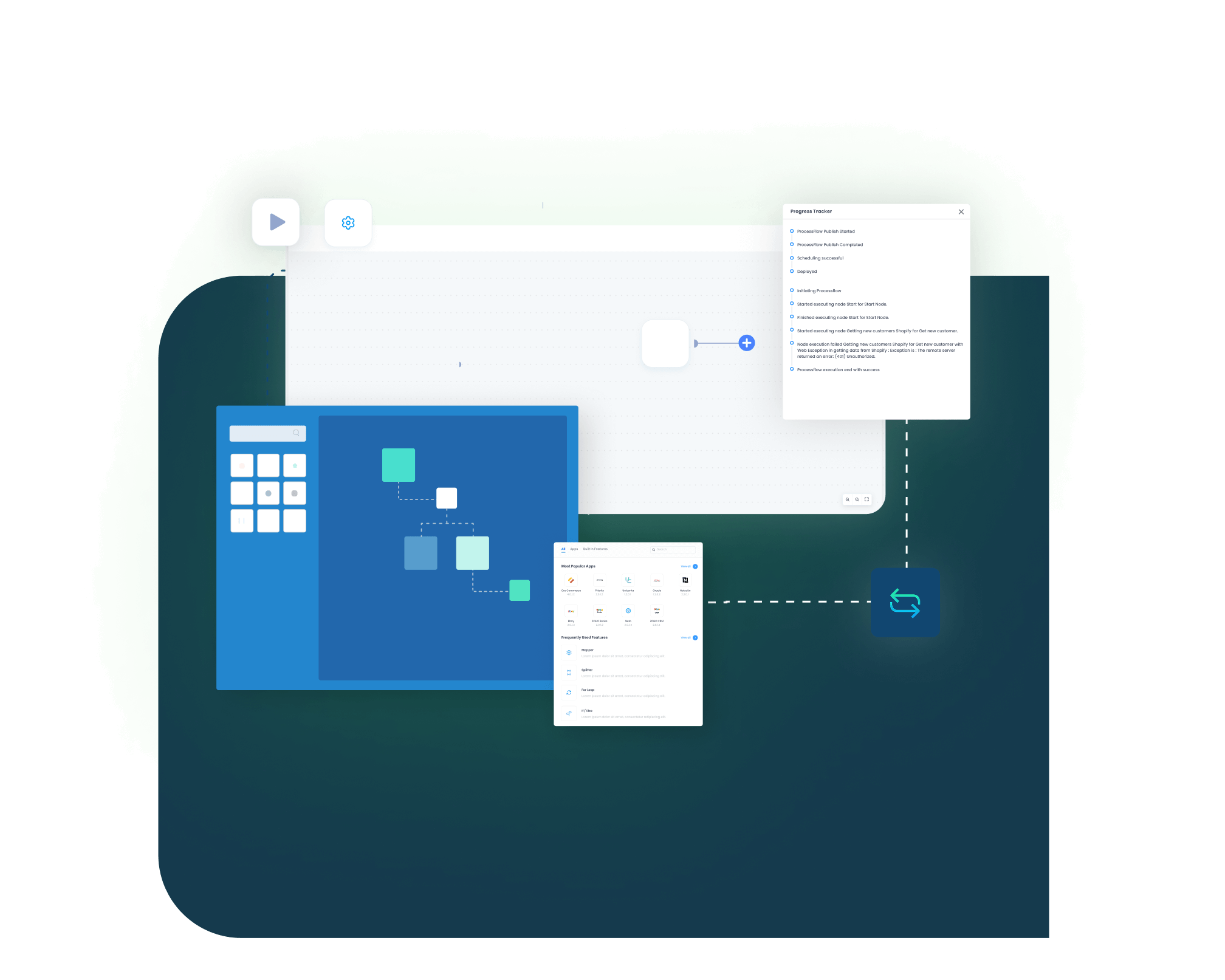
Standard Features Covered in Our Square POS and Dynamics 365 NAV Integration Template
Square POS Sales → Dynamics 365 NAV Transactions
- Completed Square sales can be sent to NAV as sales invoices, sales orders, journal entries, or mapped transaction records based on the posting model. Item lines, quantities, discounts, tax, customer details, and location data can move with the sale.

Square Items → NAV Item Matching
- Square SKUs and item names can be matched with NAV item numbers before records are posted. Variant, modifier, category, and unit details can be included where the POS and NAV item setup support them.
Square Customers → NAV Customer Records
- Customer information captured at checkout can create or update NAV customer records. Contact details, addresses, customer identifiers, and related transaction references can be mapped into the required NAV fields.
Square Tenders → NAV Payment Review
- Card, cash, gift card, and other tender details can move into NAV finance workflows. Authorization references, payment dates, tender types, and store locations can support receipt and reconciliation review.
Square Tax Lines → NAV Tax Groups
- Sales tax collected in Square can be mapped to NAV tax groups, VAT fields, or reporting fields. Refund tax changes and discount-related adjustments can also follow the configured tax logic.
NAV Inventory → Square Stock Counts
- Dynamics 365 NAV inventory can update Square availability for mapped SKUs and locations. This helps the POS work closer to ERP-approved stock levels.
Square Refunds → NAV Credit Handling
- Refunds issued in Square can be routed into NAV as credit memo, return, or review records. The original sale reference, item data, refund reason, tax adjustment, and restock decision can stay connected where the source data supports it.
Square Locations → NAV Dimensions
- Square location data can map to NAV location codes, departments, dimensions, or reporting segments. This helps finance separate store activity without rebuilding reports outside the ERP.
Square Payouts → NAV Reconciliation
- Payout or transfer references from Square can support NAV bank reconciliation workflows. Fees, refunds, timing differences, and settlement references can be reviewed against related POS sales.
Square Adjustments → NAV Inventory Review
- Store-side stock adjustments can be routed into NAV item journal or review flows. This gives inventory teams a way to check shrinkage, corrections, and manual changes before posting.
NAV Products → Square Item Records
- NAV item data can update Square item records when product control belongs in the ERP. SKU, item name, category, status, and price fields can be mapped based on the Square catalog structure.
Register Data → NAV Audit View
- Register, cashier, shift, or device details can support NAV audit and operations reporting when those fields are available. This gives teams more context when checking unusual sales or refund activity.
Discounts and Fees → NAV Posting Rules
- Square discounts, service charges, fees, and adjustments can map into NAV accounts, dimensions, or reporting fields. This helps finance review more than just the final payment amount.
Disputes and Chargebacks → Finance Follow-Up
- Dispute or chargeback references can be routed for review when Square provides the required details. The issue can remain closer to the related sale, payment, and customer record.
Popular Square POS Integrations
Our Integration Platform helps you seamlessly connect Square POS with other Business Applications.
Looking for a Specific Integration?
Visit All Square POS Application
Popular Microsoft Dynamics Nav Integrations
Looking for a Specific Integration?
Visit All Microsoft Dynamics Nav Application
INTEGRATION BROCHURE
Download the Square POS and Dynamics 365 NAV Integration Brochure
Download the brochure to plan how Square POS and Dynamics 365 NAV can work together across sales posting, payment mapping, item matching, inventory updates, refunds, tax handling, and reconciliation.
Inside You’ll Find:
- Integration Architecture: See how Square POS and Dynamics 365 NAV can exchange POS transactions, tender details, customer records, item data, stock updates, refund records, tax totals, and payout references.
- Flow Planning: Review how each flow should move from source to target across store sales, finance review, inventory control, and multi-location operations.
- Rollout Approach: Begin with the sales and payment path. Then add inventory, refunds, taxes, payouts, dimensions, and reporting flows as the operating model becomes clearer.
- Testing Checklist: Test SKU matching, tax mapping, tender types, customer matching, refunds, location codes, payout references, duplicate checks, and retry scenarios before launch.
- Operational Readiness: Prepare teams to monitor runs, inspect logs, review failed transactions, check snapshots, and retry corrected records after go-live.
Start Integration at just $99 per month with Shopify, Salesforce, HubSpot, Zoho, WooCommerce and more.
Enterprise-grade integration powered by hands-on support without enterprise pricing
INTEGRATION GUIDE
How Does the Workflow Run End-to-End
A Square POS and Dynamics 365 NAV integration is built through ProcessFlows. A ProcessFlow defines the source, target, entity, connector action, schema, mapping, validation, run mode, retry setting, and monitoring route for each movement of data between Square and NAV.
See How This Would Run in Your Business
Square POS and Dynamics 365 NAV Integration
Trigger & Source Connection
The flow can begin from a webhook, schedule, manual run, or configured sync. The source may be Square for transactions, payments, refunds, customers, stock, tax, or payout data, and NAV for ERP-side records.
Data Extraction & Schema Reading
Transformation & Field Mapping
Source fields are converted into the format required by the target system. SKU, item number, quantity, tax, discount, tender type, location, customer, posting group, and dimension values can be mapped based on the flow.
Validation & Business Rule Execution
Target Push & Response Handling
Monitoring, Retry & Audit Logging
Real-world use cases
Use Cases
The Square POS and Dynamics 365 NAV integration is built for businesses that need store checkout activity and ERP records to stay aligned. It supports store teams, finance users, inventory teams, multi-location retailers, and operations leaders who need better visibility into sales, payments, refunds, and stock movement.
Store Operations
Register activity reaches NAV without manual rebuilding
- Square POS sales can create mapped NAV transaction records.
- Tender type, tax, discount, and location data can move with each sale.
- Customer information can update NAV where the checkout record includes it.
- Failed or incomplete transactions can be reviewed before retry.
What this integration handles
Moved
Mapped
Linked
Reviewed
Payment Reconciliation
Square payments become easier to compare with NAV finance records
- Payment references can move from Square into NAV finance workflows.
- Refunds can remain tied to the related transaction where supported.
- Payout or transfer data can help teams compare settlement activity.
- Logs and snapshots give finance a clearer trail for failed or missing records.
What this integration handles
Matched
Checked
Traceable
Auditable
Inventory and Returns
Store sales and refunds update the ERP-side inventory view
- Square sales can reduce inventory through the NAV posting process.
- NAV item availability can refresh Square stock counts by SKU or location.
- Refund records can be routed for credit or return review.
- Inventory adjustments can be checked before they affect the ERP record.
What this integration handles
Updated
Synced
Controlled
Reviewed
Finance Reporting
Store-level activity becomes easier to report inside NAV
- Square locations can map to NAV dimensions or location codes.
- Sales and refunds can be grouped by store or reporting segment.
- Tax totals can follow the mapped NAV tax structure.
- Transaction references can support month-end review.
What this integration handles
Segmented
Store reporting
Mapped
Locations and dimensions
Aligned
Tax and refund totals
Ready
Finance review data
Meet appse ai
How appse ai Helps Streamline Square POS and Dynamics 365 NAV Integration
After Square POS and NAV are connected, teams still need to watch exceptions, failed records, refund mismatches, slow payment checks, and repeated mapping issues. appse ai helps add AI-assisted workflow support around those integration operations, giving teams better context while they design, monitor, and improve the automation.
Workflow Design
Issue Detection
Exception Review
Decision Support
Process Signals
API Orchestration
Workflow Optimization
Ready to Launch Your Square POS and Dynamics 365 NAV Integration Today?
Store sales, payment records, stock updates, tax totals, and refund activity should not move through separate manual paths. APPSeCONNECT helps connect POS and ERP workflows so store teams can keep selling while finance and operations work from cleaner, more traceable records.
Companies automating their business through APPSeCONNECT
Related Resources
Square POS and Dynamics 365 NAV integration connects store checkout data with ERP and finance records. Sales, payments, customers, items, stock updates, refunds, tax totals, and location data can move through configured integration flows.
Businesses use Square POS Dynamics 365 NAV integration to reduce manual sales entry, payment matching work, inventory differences, refund tracing gaps, and tax review delays. It helps stores operate in Square while NAV supports ERP control and finance reporting.
The integration uses configured ProcessFlows to connect Square POS and Dynamics 365 NAV. Each flow defines the source, target, entity, connector action, mapping rules, validation logic, retry behavior, and monitoring path.
The integration can sync sales transactions, payment references, customer records, item data, tax details, refunds, inventory updates, locations, and payout references where the setup supports those records.
Square POS sales can be sent to Dynamics 365 NAV as sales invoices, sales orders, journal entries, or mapped transaction records. The record can include item lines, quantities, discounts, tax, payment references, customer data, and location details.
Square tender details can be mapped into NAV finance and reconciliation workflows. Card, cash, gift card, and other tender types can carry payment references, dates, and store details when available.
Dynamics 365 NAV can update Square stock counts for mapped items and locations. Square sales, returns, and adjustments can also be routed into NAV inventory or review flows depending on the posting process.
Square locations can be mapped to NAV location codes, dimensions, departments, or reporting segments. This helps multi-store businesses report and reconcile activity by store.
Square customer data can create or update NAV customer records. The mapping can include name, email, phone, address, customer identifier, and related transaction references where those details are captured.
Square refunds can be sent into NAV as credit memo, return, or refund review records. The flow can include refund amount, item detail, tax adjustment, reason, and original transaction reference.
Square tax totals can be mapped to NAV tax groups, VAT fields, or reporting fields. Refund tax adjustments and discount-related tax changes can also follow the configured tax mapping.
Square payout or transfer references can be used in NAV reconciliation workflows where the data is available and included in the setup. Finance teams can review fees, refunds, settlement timing, and related sales activity together.
NAV item data can update Square item records when NAV is the product source. Square SKUs can also be matched against NAV item numbers when POS sales are imported.
APPSeCONNECT can support NAV integration scenarios based on environment access, connector availability, and deployment requirements. Older or customized NAV environments should be reviewed during discovery before scope is confirmed.
If a sync fails, teams can use logs, snapshots, node status, transaction details, API responses, and retry controls to review the issue. Common causes include missing fields, mapping errors, duplicate records, credential issues, or NAV validation failures.
appse ai adds AI-assisted support for workflow design, issue detection, exception review, and process signals. It helps teams review repeated sales import failures, tender issues, refund mismatches, tax errors, and slow reconciliation points with more context.
Start by identifying the flows your team needs first. Common starting points include sales sync, tender mapping, item matching, customer sync, inventory updates, refund handling, tax mapping, and reconciliation support.